
Utah's Public Records Law and Salt Lake County
Utah's open-records system runs on GRAMA. It governs records held by executive and local government, which includes Salt Lake County agencies, the Sheriff's Office, the Health Department, and county administrative offices. The law starts from a simple idea: a person may inspect a public record and get a copy, subject to fees and a few classifications that keep some records private.
Court records are the big exception. District Court and Justice Court files are judiciary records, governed by court rules rather than GRAMA. So a jail booking record goes through a county GRAMA request, while a court case file goes through Utah Courts. The public access right itself lives in Utah Code 63G-2-201.
That split matters. Send a court request to the county, or a county request to the court, and you lose time. When you are unsure which side holds a record, the county Records Management staff can point you to the right office before you file.
What Salt Lake County Records You Can Request
The county is not one big records counter. Each agency keeps its own files, so the first step is matching the record to the office. A booking video sits with the Sheriff, a marriage license with the Clerk, an inspection report with the Health Department, and a meeting record with the County Council.
- Sheriff's Office: booking records, incident and jail records.
- County Clerk: marriage licenses, election, and council records.
- Health Department: vital records abstracts and inspection files.
- County Council: agendas, minutes, and correspondence.
- Other county offices: property, tax, and administrative records.
Marriage and court matters have their own faster channels. For a marriage copy, use the Clerk's marriage process; for a court file, use XChange. GRAMA is for the rest.
Specificity is the trick. A request that says "send me everything about John Smith" is weak and slow. A strong one names the record and the facts, such as a booking record, a probable cause statement, a jail in/out docket entry, and a mugshot for a named person with a birth date and a booking date. For administrative records, point to the offices, a date range, and a key term in the documents.
How to File a Public Records Request in Salt Lake County
A GRAMA request is a short written request to the right agency. The county runs an online portal that helps route requests, and each agency also accepts its own GRAMA form. A clear, specific request gets a faster answer.
- Identify which county agency holds the record, since each agency keeps its own.
- Write a clear description with names, dates, and specifics.
- File online through the county NextRequest portal, or use the agency's GRAMA form.
- Include your name, mailing address, daytime phone, and the description.
- Ask for a fee waiver in the request if it serves the public interest.
The county NextRequest portal routes online requests, the Records Management contact page explains agency routing, and a fillable GRAMA form is available for mail or in-person filing.
Salt Lake County Public Records Request Form Fields
The county GRAMA form asks for a standard set of details. Most come straight from Utah Code 63G-2-204, which sets what a written request must include. The table lists the fields.
| Field Label | Type | Required | Notes |
|---|---|---|---|
| Date | Date | No | The date of the request. |
| County agency or office | Text | Yes | Name the agency and a contact if known. |
| Requestor name | Text | Yes | Include a business name if it applies. |
| Mailing address | Text | Yes | Required for a GRAMA request. |
| Daytime phone | Text | If available | Used for contact about the request. |
| Text | No | For notices and electronic response. | |
| Description of records | Multiline | Yes | Identify records with reasonable specificity. |
| Preferred form of access | Checkbox | No | Inspect, receive a copy, or other. |
| Fee waiver request | Checkbox | No | Explain a public-benefit basis. |
| Signature | Signature | Yes | Requester certification. |
Records the Salt Lake County Sheriff Posts Online
Some Sheriff records are already public online, so you do not need a GRAMA request for them. The Sheriff's Find a Prisoner page pulls together the tools for current custody and recent jail movement.
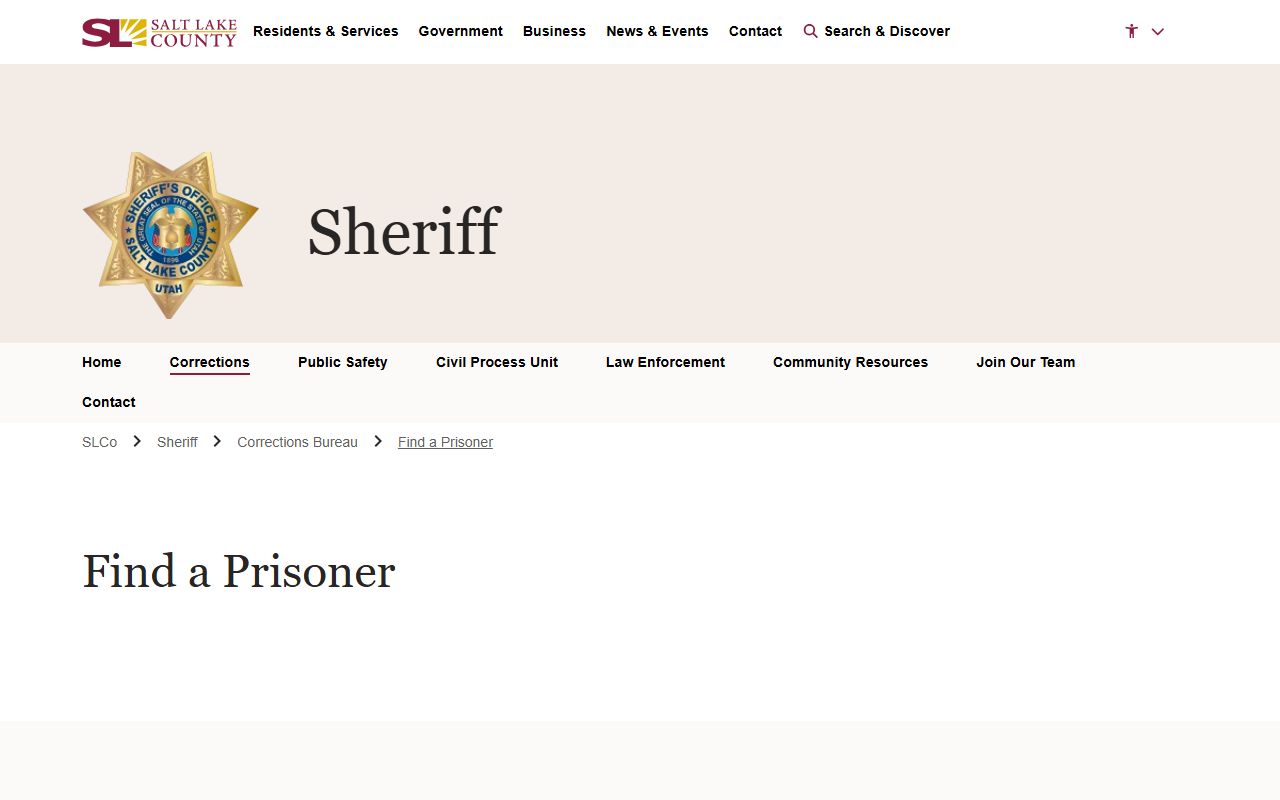
The Find a Prisoner page links the inmate lookup, the jail dockets, and the statewide warrant search in one place.
The inmate lookup itself is the most-used online record on the jail side.
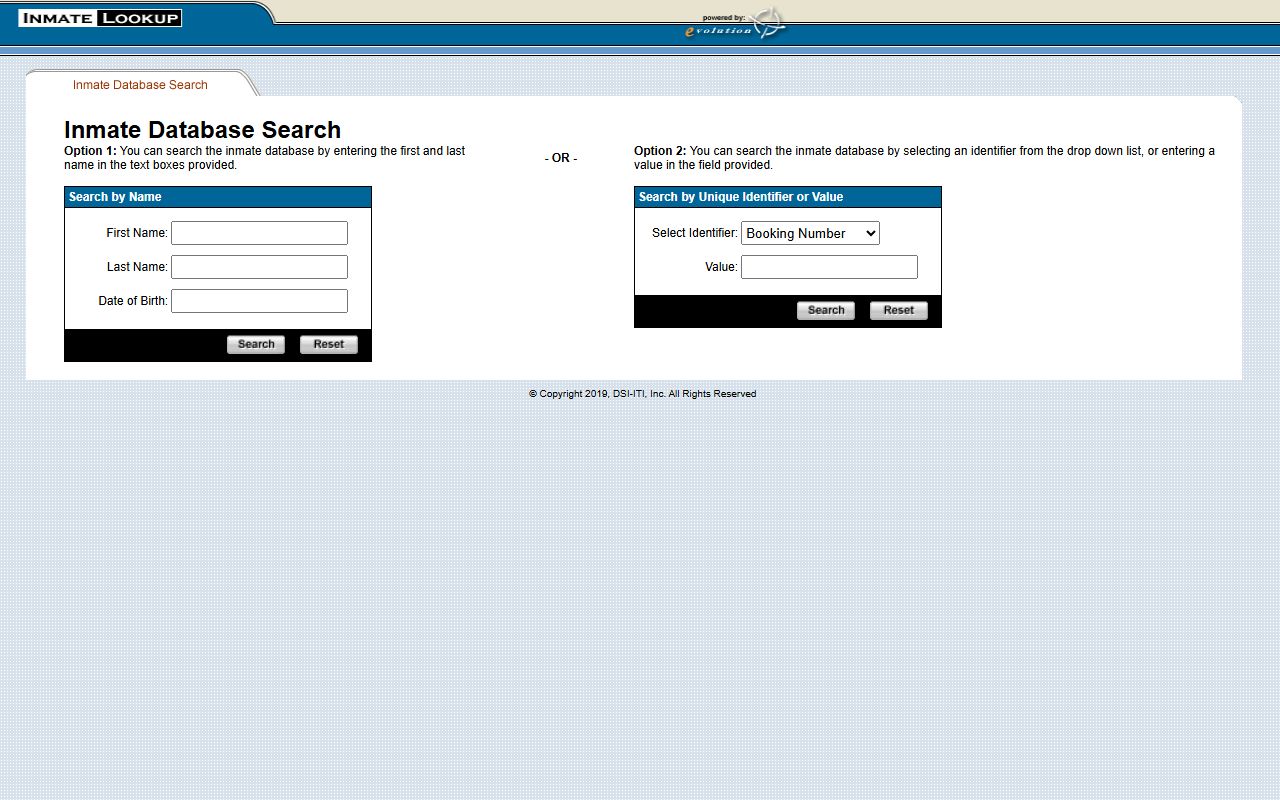
The Inmate Lookup tool searches current custody by name or by a booking number, and it does not require a records request. For more on it, see Salt Lake County inmate records.
Requesting Salt Lake County Sheriff and Jail Records
Records that are not online, like a full booking file or an incident report, take a GRAMA request to the Sheriff's Office. The Sheriff runs its own Corrections Bureau records process with its own form.
The Sheriff's Office main page introduces the office, its facilities, and its bureaus, including Corrections.
The contact page is where the records forms and request details live.
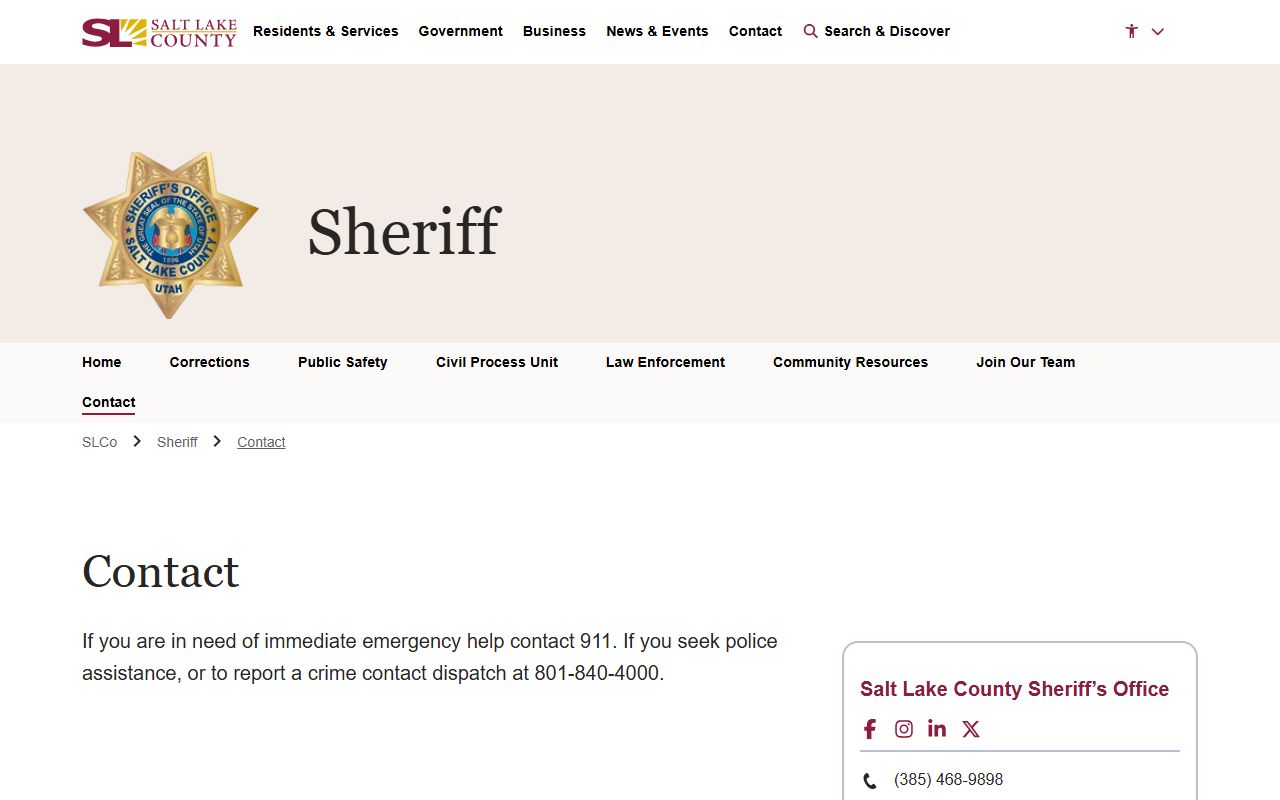
The Sheriff contact page lists records, jail, civil division, and the jail records request forms.
The Corrections Bureau page sets out the jail records process and the prisoner FAQ.
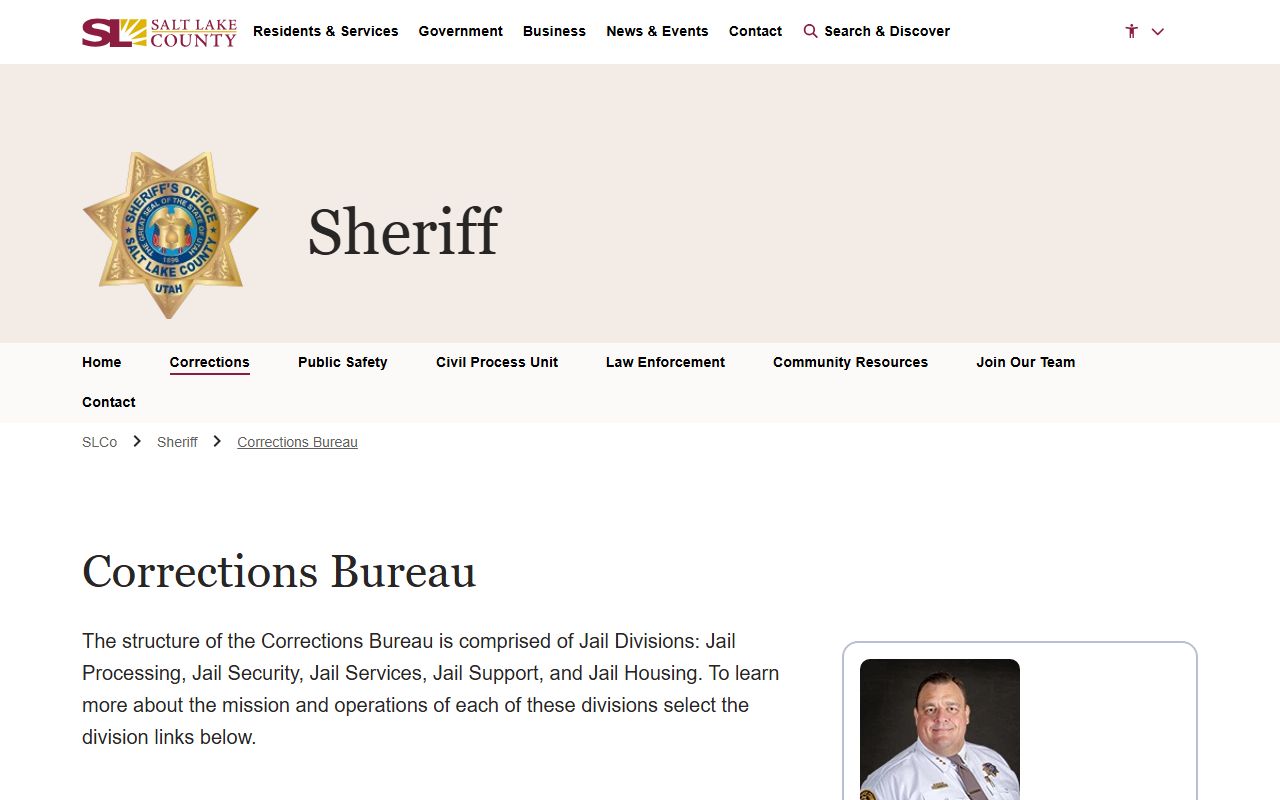
The Corrections Bureau page covers the jail mission, divisions, dashboards, and the GRAMA request for jail records, which needs a photo ID before release.
Salt Lake County Response Timelines
Utah law sets a clock on responses. Under the Health Department's GRAMA guidance, an entity generally has 10 business days to respond, and 5 business days for a media request, with more time allowed in extraordinary circumstances. The agency does not have to create a record that does not already exist; it produces existing records that can be reproduced.
So a tight, specific request that names the agency and the record moves faster than a broad one. A vague request can be slowed by extra clarification or routing.
Watch the deadline, but plan for some flex. A large or sensitive request can trigger an extension, and a request that needs legal review of private or protected material can take longer. Keeping your contact details current helps the agency reach you if it needs to narrow the request.
Public Records Fees in Salt Lake County
Inspecting a public record is free during business hours. Fees come in when an agency has to research, compile, or copy records. Utah Code 63G-2-203 allows reasonable fees for the actual cost, and each agency sets its own schedule.
| Item | Fee |
|---|---|
| Inspect a public record | Free during business hours |
| Record research | Actual cost allowed under Utah Code 63G-2-203 |
| Health Department research example | $6.25 per 15 minutes, first 30 minutes free |
| Copies | Reasonable cost set by the agency |
| Fee waiver | Possible for a public-benefit request |
Note: The Health Department fee is one agency's example, so do not assume every Salt Lake County office charges the same rate.
Records That Are Exempt in Salt Lake County
Not every record is public. GRAMA classifies records as public, private, controlled, or protected. Private records, under Utah Code 63G-2-302, include personal data such as a birth date, Social Security number, or home address for people other than the requester. Controlled records, under Utah Code 63G-2-303, cover certain medical and mental-health material. Protected records, under Utah Code 63G-2-305, take in law-enforcement, security, and similar sensitive files.
An agency can redact the private parts and still release the rest. So a denial is often partial, not total. On a jail record, for example, the Sheriff may release a booking record while blacking out a third party's birth date, address, or other personal identifiers that the law classifies as private.
If Your Salt Lake County Request Is Denied
A denial should state a legal basis, such as private, controlled, or protected, or that no responsive record exists. If you disagree, GRAMA gives an appeal path. For county records, the appeal usually goes to the agency's chief administrative officer, and from there to the state records process.
Utah Code 63G-2-401 sets the appeal route for a denial or a classification you want to challenge. For a court record marked non-public, the path is different: use Utah Courts procedures and a petition to unseal, not a county GRAMA appeal. Keep copies of your request and the denial, since an appeal moves faster when you can show exactly what you asked for and what the agency said.