
Salt Lake County District Court Overview
The District Court is Utah's trial court of general jurisdiction, and Salt Lake County is in the Third Judicial District. That district also covers Summit and Tooele counties, but the Salt Lake County caseload is by far the largest. The main location is the Scott M. Matheson Courthouse in downtown Salt Lake City, which also houses the Utah Supreme Court, the Court of Appeals, and the State Law Library.
Because it is a general-jurisdiction court, the District Court takes the heavy cases. Felonies, divorces, probate, guardianship, and big civil suits all land here. Lower-level matters go to the Justice Courts, and youth cases go to the Juvenile Court. The District Court also hears appeals from the Justice Courts.
The Matheson Courthouse stands on State Street downtown, across from the historic City and County Building, which makes the block a clear legal-government center. The UTA TRAX Courthouse Station is right next to it, so transit is a practical way in. Public parking in the courthouse garage changed in 2026, so court users should check the current parking notice before a visit.
Records of these District Court cases are searched through Utah Courts, not through a county office or the Sheriff.
Salt Lake County Courts and Offices
Several courts and court offices serve the county, and they are not all in one building. The District Court and the appellate courts share the Matheson Courthouse, while the Justice Courts sit elsewhere. The table lists the main locations.
| Court / Office | Address | Phone |
|---|---|---|
| Third District Court, Matheson Courthouse | 450 South State Street, Salt Lake City, UT 84111 | (801) 238-7300 |
| Third District Juvenile Court | 450 South State Street, Salt Lake City, UT 84114 | (801) 238-7700 |
| Utah State Law Library | 450 South State Street, Salt Lake City | (801) 238-7990 |
| Salt Lake County Justice Court | 2001 South State Street, Suite S4200, Salt Lake City, UT 84190 | (385) 468-8200 |
| Salt Lake City Justice Court | 333 South 200 East, Salt Lake City, UT 84111 | (801) 535-6300 |
Other cities in the county run their own municipal justice courts, so a local traffic case may sit in a city court rather than the county one. The State Law Library at the Matheson Courthouse is also open to the public for legal research and free XChange access, which makes it a useful stop when a case is not online elsewhere.
District Court vs. Justice Court vs. Juvenile Court
Utah splits trial work across three court types, and the case decides which one hears it. The District Court takes the serious and general cases. The Justice Courts take limited, local matters. The Juvenile Court takes youth cases under its own rules. The table compares them.
| District Court | Justice Court | Juvenile Court | |
|---|---|---|---|
| Jurisdiction | General | Limited | Juvenile |
| Handles | Felony, divorce, probate, major civil | Traffic, small claims, class B/C misdemeanors | Delinquency, child welfare |
| Records | Mostly public | Mostly public | Mostly restricted |
| Appeals Go To | Court of Appeals or Supreme Court | District Court | Court of Appeals |
So a felony or a divorce is a District Court case, a speeding ticket is a Justice Court case, and a delinquency matter is a Juvenile Court case.
The records side follows the same logic. District and Justice Court cases are mostly public and show up in the state's online system. Juvenile cases are mostly closed, since Utah treats juvenile delinquency and child-welfare files under a stricter access framework. That is why a name search can find an adult case but come up empty on a youth matter.
How a Case Moves Through the Salt Lake County System
Cases flow upward through the court system. A serious case starts in the District Court, while a minor one starts in a Justice Court. Appeals then climb the ladder. The basic path looks like this:
Justice Court → District Court → Utah Court of Appeals → Utah Supreme Court.
There is a twist for Justice Court appeals. A Justice Court case that is appealed generally goes to the District Court for a new trial, called a trial de novo, rather than straight to an appellate court. District Court judgments, by contrast, go to the Utah Court of Appeals or the Utah Supreme Court depending on the case type and statute. This is why the same name can show up in more than one court, since a case can move from a Justice Court up to the District Court and beyond. Tracing that path is the surest way to find every record tied to one matter.
Salt Lake County Civil, Family, and Criminal Divisions
The District Court's work breaks into broad areas. Civil covers contracts, injury, debt, and property. Family covers divorce, custody, and support. Criminal covers felonies and the serious cases a prosecutor files. Probate, guardianship, and conservatorship round it out.
Family cases are among the most common reasons people deal with the court.
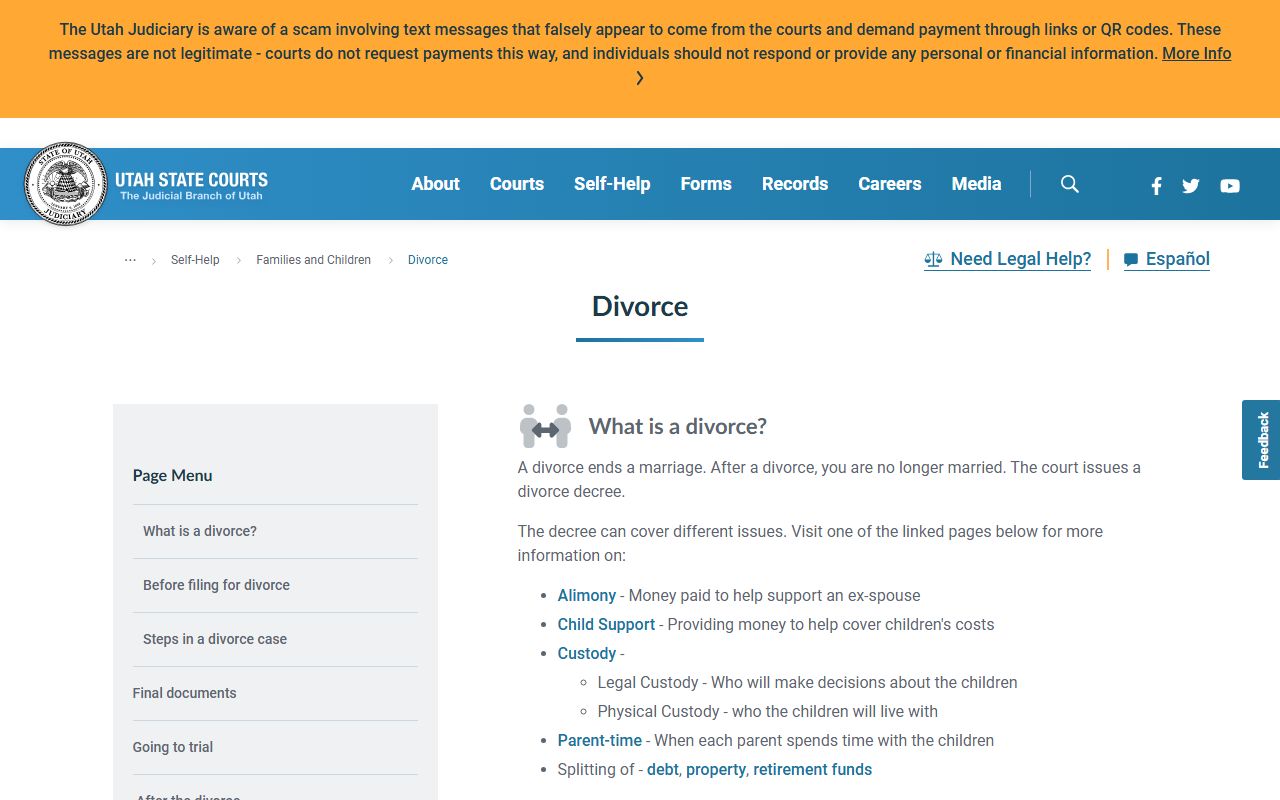
The Utah Courts divorce self-help page walks through filing, residency, custody, support, and the forms a District Court divorce needs.
Probate is also a District Court matter, including the simpler small-estate path.
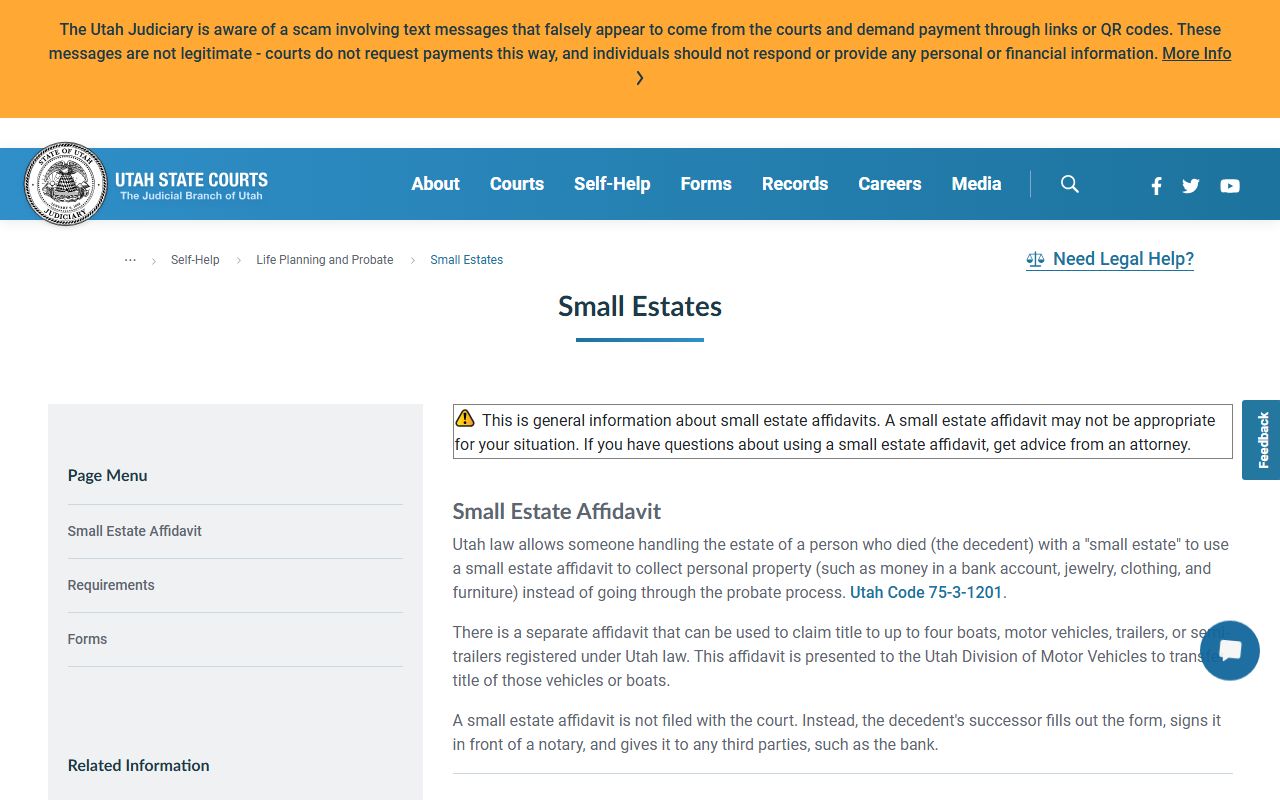
The small-estate affidavit page, tied to Utah Code 75-3-1201, lets some estates skip full probate. Guardianship and conservatorship cases also run through the District Court, and those files can hold protected medical and financial detail that the public cannot see.
On the criminal side, the court also handles requests to clear a record.
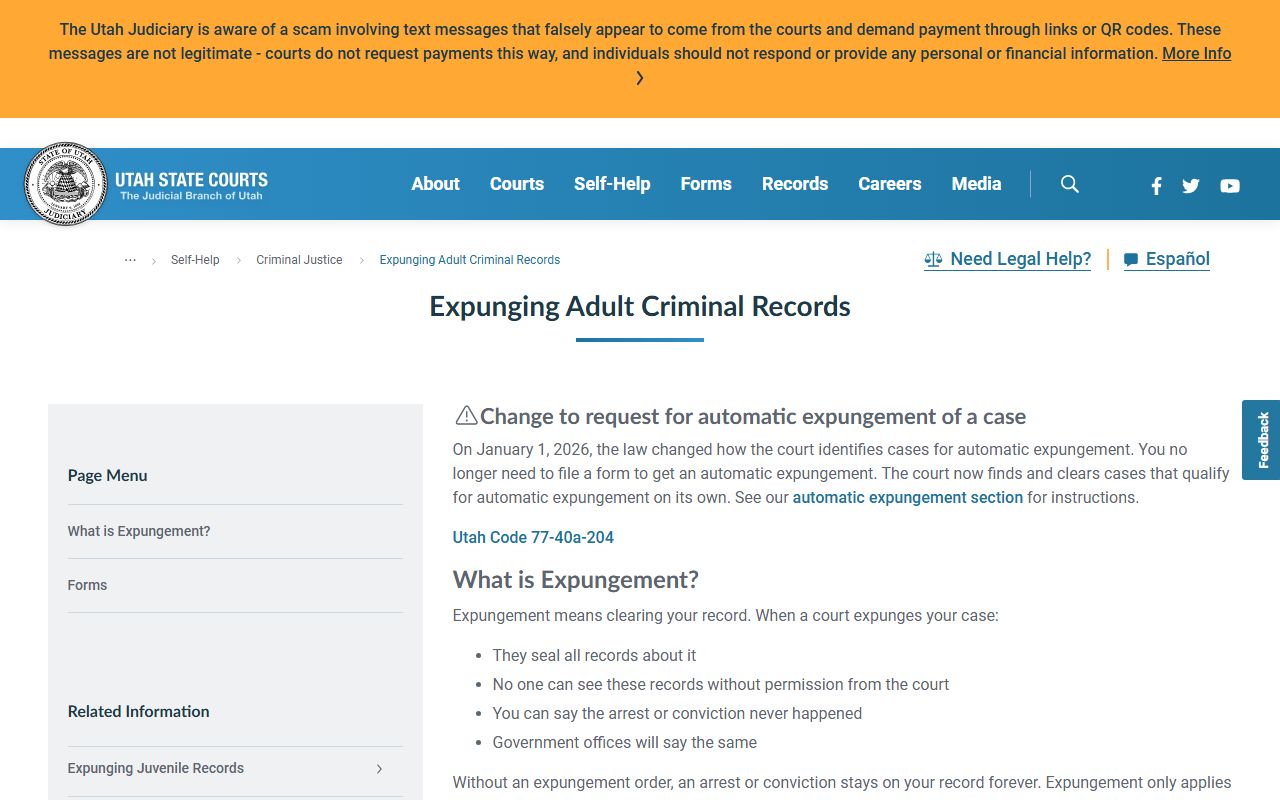
The Utah Courts adult expungement page explains when a person can ask to expunge a criminal record.
Civil cases fill out the rest of the docket. They range from contract and injury claims to debt collection, liens, garnishment, and name changes. A protective order matter can also start here. Each division has its own forms and steps, which is why pointing your filing to the right division saves time.
Salt Lake County and the Third Judicial District
Utah groups its District Courts into judicial districts. Salt Lake County belongs to the Third Judicial District, alongside Summit and Tooele counties. The district keeps its own page of resources, forms, and standing orders, and the Third District also posts judge and team contacts for specific courtrooms.
For most county residents, the practical takeaway is simple: a District Court case in Salt Lake County is a Third District case, handled mainly at the Matheson Courthouse downtown.
The district structure also affects scheduling and judges. The Third District assigns judges and commissioners to courtrooms at Matheson, and the court posts team contacts so a party can reach the right clerk team. If you have a hearing, confirm the courtroom and the date with the court before you travel.
Justice and Juvenile Courts in Salt Lake County
Below the District Court, the Justice Courts are the front door for everyday cases. The Salt Lake County Justice Court handles traffic, small claims, and lower-level misdemeanors at the County Government Center, and several cities run their own municipal justice courts.
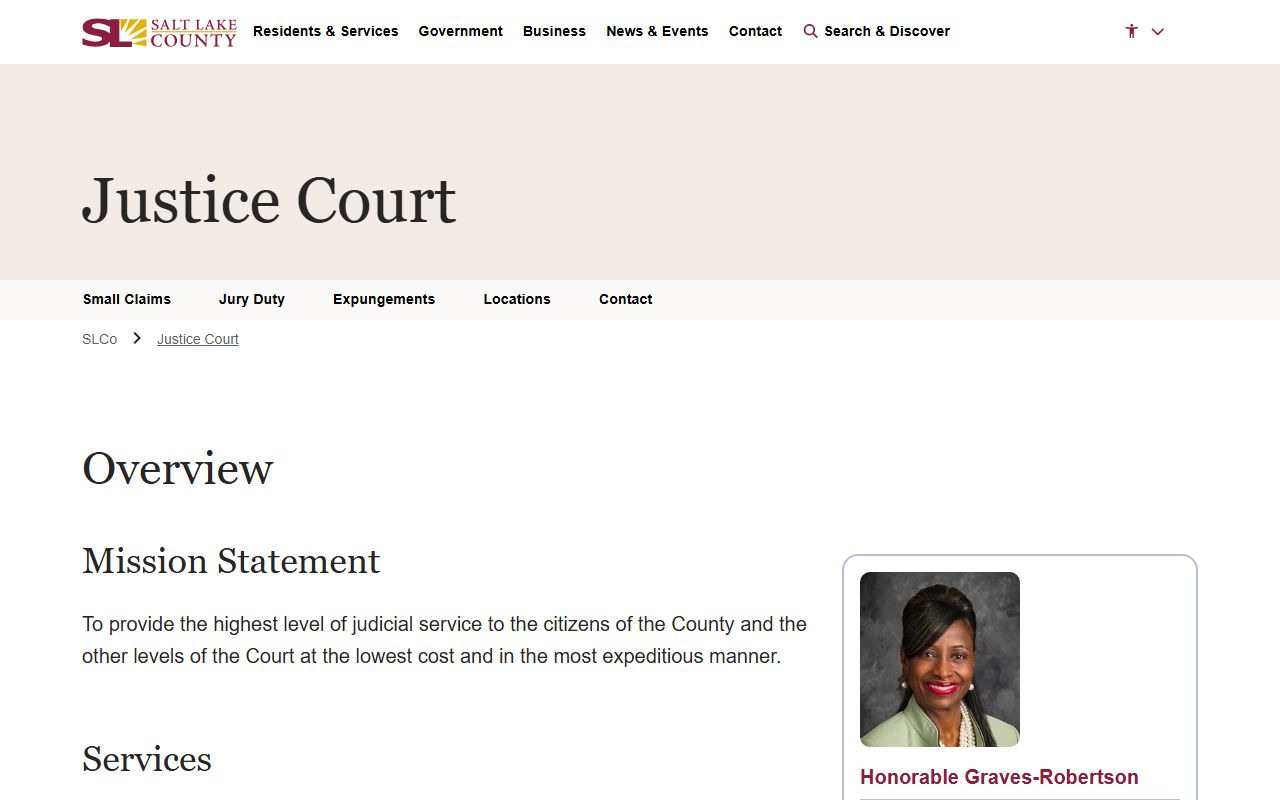
The Salt Lake County Justice Court page covers the county-operated court at the Government Center. The Juvenile Court is separate again, handling delinquency and child-welfare matters, with most of its records closed to the public.
City justice courts matter for routing. A ticket written in West Jordan, Sandy, Murray, or another city often goes to that city's justice court rather than the county one. So when you look for a case, match it to the court that actually heard it, which the citation or the online case record will show.
Self-Help for Salt Lake County Court Cases
People without a lawyer have a real resource in the Utah Courts Self-Help Center. It gathers forms and plain-language steps for common District Court matters, though it does not give legal advice or represent anyone.
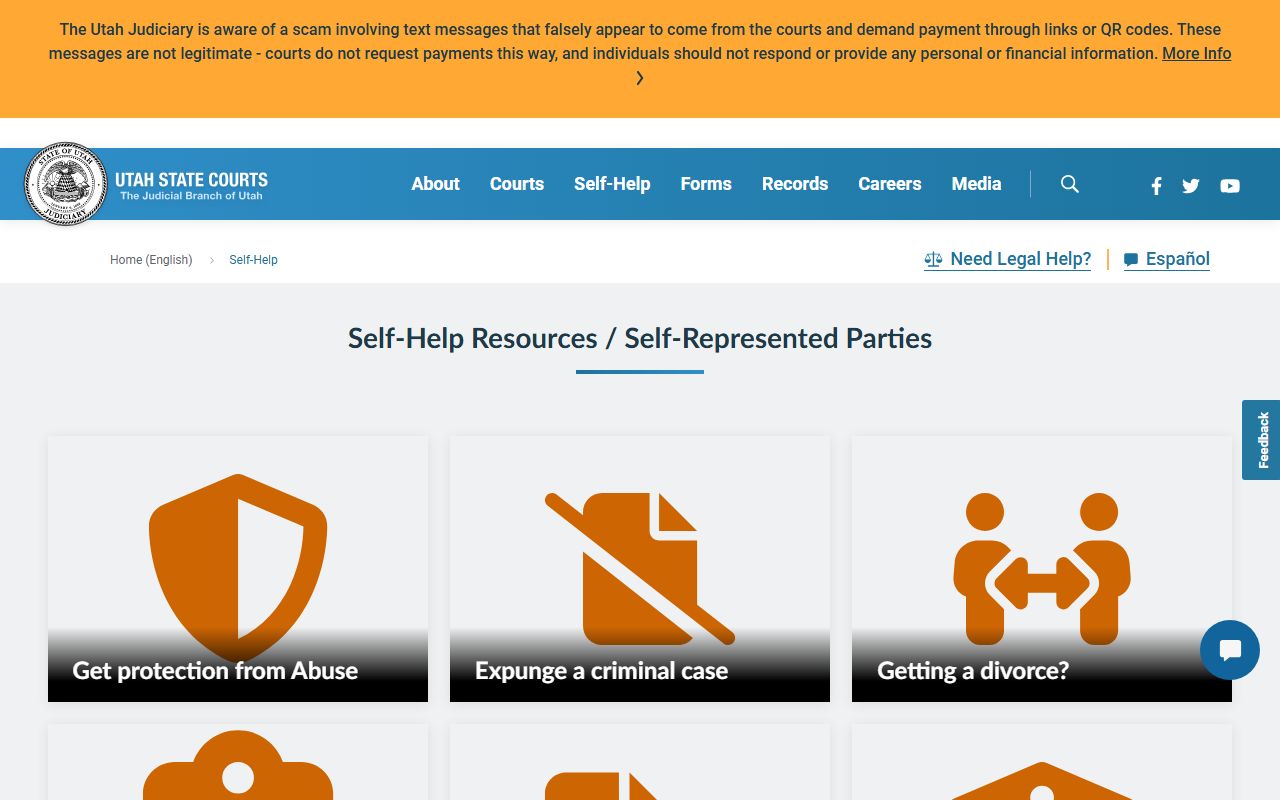
The Self-Help Center landing page is the hub for divorce, probate, expungement, and other case-type guides. It even covers marriage basics on the family side.
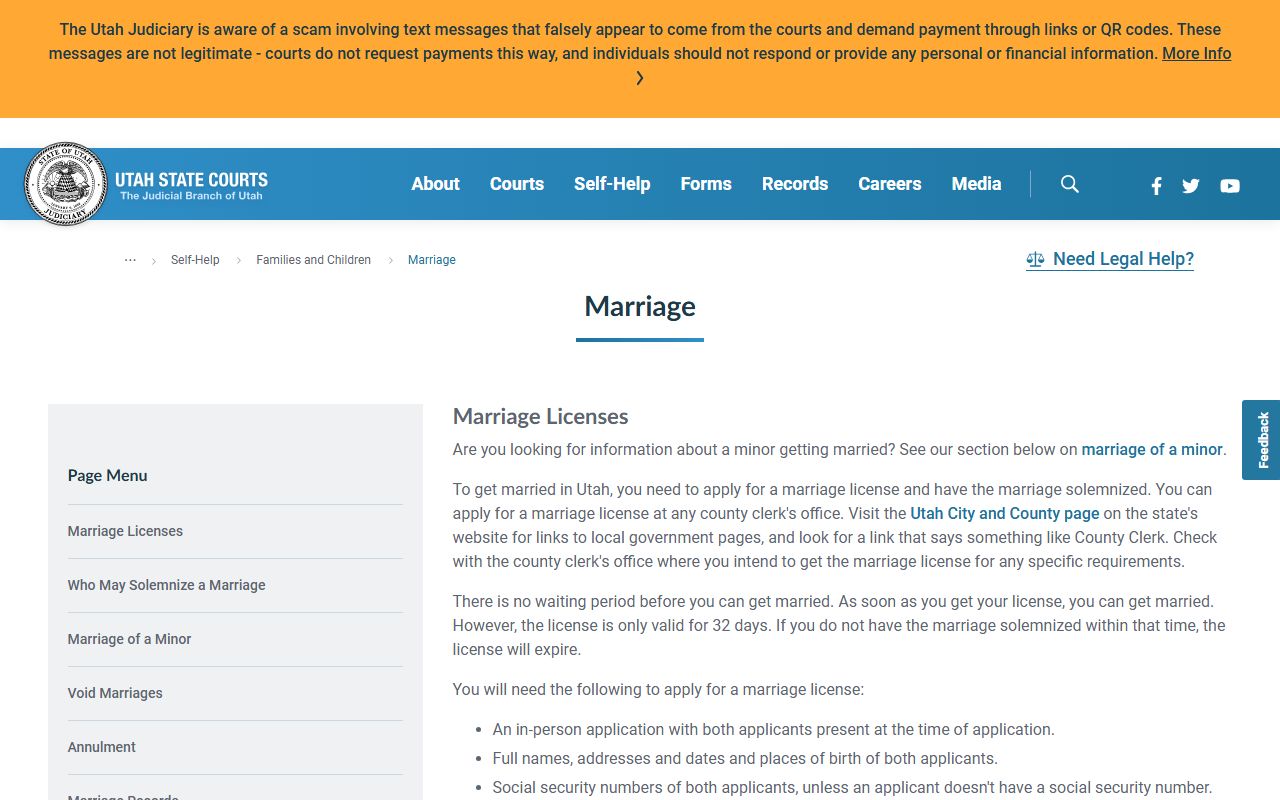
The Utah Courts marriage page explains the basics, though the marriage license itself comes from the Salt Lake County Clerk, not the court.
The Self-Help Center is most useful for a straightforward case, like an uncontested divorce or a small estate. For a contested matter, a case with children, or a serious criminal charge, a lawyer is worth the cost. Many people use the center for the forms and a consultation for the strategy.