
Salt Lake County Jail Roster Overview
The Salt Lake County Sheriff's Office runs the county jail system and the public inmate roster. Sheriff Rosie Rivera leads the office, and the Corrections Bureau handles booking, housing, and release. The county operates two jails. The main one is the Metro Jail, also called the Adult Detention Center. The second is the Oxbow Jail Facility. Both book and hold people for the county, and both feed the same online tools.
The roster is not a single static list. The Sheriff posts an Inmate Lookup tool, a Jail In/Out Docket, and a roster page. The lookup finds a person by name or by an ID. The in/out docket shows who came in or went out recently. A privacy notice on the roster says some personal identifiers were removed to follow state law, so the public view shows less than the full file.
The Corrections Bureau says its job is to hold people who pose a danger, give humane care, and run programs that cut repeat offenses.
Inside the Salt Lake County Corrections Bureau
The Corrections Bureau is the part of the Sheriff's Office that runs the jails. It is built from five divisions: Jail Processing, Jail Security, Jail Services, Jail Support, and Jail Housing. Together they book new arrivals, keep order, feed and care for prisoners, and manage day-to-day housing. Chief Deputy Matt Dumont and Deputy Chief Shanda Gonzalez are listed among the bureau's leaders.
The Sheriff's Office is large. It reports more than 1,100 employees and volunteers across Corrections, Public Safety, Law Enforcement, Search and Rescue, and other divisions. The two jails, Metro and Oxbow, are run to keep costs low and to cut repeat offenses through programs. That mix of size and structure is why the public roster and the records process feel fairly formal.
How to Use the Salt Lake County Inmate Roster
The Inmate Lookup tool is the place to start. It lives on the Sheriff's website and offers two ways to search. You can type a name, or you can pick an identifier and enter its value. The Find a Prisoner page links the lookup along with the dockets and the statewide warrant search.
- Open the Salt Lake County Inmate Lookup tool from the Sheriff's Find a Prisoner page.
- To search by name, enter a first and last name, and add a birth date for common names.
- To search by ID, choose Booking Number, Permanent Number, or State ID, then enter the value.
- Click Search, and use Reset to clear the form and try again.
- For a very recent booking, open the Jail In/Out Docket, which lists fresh arrivals and releases.
The Find a Prisoner page gathers the lookup, the dockets, and the warrant search in one place. The jail dockets and rosters page holds the privacy notice and the live in/out listings.
Salt Lake County Jail Roster Search Fields
The lookup keeps the form short. It supports a name search and an identifier search, and you do not have to fill every box. The table lists the fields the tool confirms.
| Field Label | Type | Required | Notes |
|---|---|---|---|
| First Name | Text | With last name | Part of the search-by-name option. |
| Last Name | Text | With first name | Part of the search-by-name option. |
| Date of Birth | Date | No | Helps narrow common names. |
| Select Identifier | Dropdown | For ID search | Booking Number, Permanent Number, or State ID. |
| Value | Text | With identifier | Enter the chosen identifier value. |
| Search | Button | n/a | Runs the search; Reset clears the form. |
What a Salt Lake County Inmate Record Shows
Open a result and the record shows a focused set of fields. State privacy rules trim some details, so do not expect every personal identifier. The table maps the likely fields to what each one means.
| Field | What It Shows |
|---|---|
| Name | The booked person's first and last name. |
| Booking Number / SO# | The jail's case number for the booking. |
| Permanent Number | A lasting ID tied to the person across bookings. |
| State ID | A statewide identifier used to match records. |
| Booking Date | When the person entered the jail. |
| Charges | The offenses listed at booking. |
| Custody Status | Whether the person is held or has been released. |
| Docket Event | The Jail In/Out entry for a booking or release. |
A release date is one field the jail will not post. Staff say to ask the prisoner directly instead.
Salt Lake County Jail Facilities
The county runs two jail facilities, and both use the same main phone line. The Metro Jail is the main intake and the place for visits, deposits, property, and mail. The Oxbow Jail Facility operates alongside it with its own visitor limits.
Salt Lake County Metro Jail (Adult Detention Center)
3415 South 900 West
Salt Lake City, UT 84119
(385) 468-8400
Oxbow Jail Facility
3148 South 1100 West
Salt Lake City, UT 84119
(385) 468-8400
Operated with the Metro Jail
Payments for prisoners at both jails are handled at the Metro Jail only.
Booking Process at the Salt Lake County Jail
Booking takes time. The Sheriff's Office says the average booking runs 6 to 8 hours from arrival. If a person is intoxicated, non-compliant, or hard to process, it can take longer. During booking, staff record identity, charges, and property, and they assign housing.
Two facts trip people up. The jail does not give out release dates, so the roster will not show one. And when a person is about to be released, the jail allows free local phone calls 15 to 30 minutes before release so they can arrange a ride.
Property held at the jail can be released about once every six months, with a form, a government ID, and roughly 48 hours of lead time.
Paperwork that needs a prisoner's signature can be dropped at Jail Administration, where staff get it signed and ready about 24 hours later. The jail's main line, (385) 468-8400, runs 24 hours a day for these requests.
Visiting a Salt Lake County Inmate
Visits at the Salt Lake County jail follow set rules. Starting April 1, 2026, walk-in personal visits are welcome, but the jail still encourages pre-scheduled visits, and pre-scheduled visits take priority. You can schedule up to six days ahead by calling the jail. Each eligible prisoner gets two visits per week, plus one clergy visit.
Visitor limits differ by jail. The Metro Jail allows three visitors, and the Oxbow Jail allows two. Infants under one year do not count toward the limit. Visitors must check in at least 30 minutes before the visit, and they cannot enter the lobby more than 45 minutes early. Anyone 16 or older needs a valid government ID; school IDs and Driving Privilege Cards are not accepted.
Leave personal items in the car except your ID. The jail bans a long list of things from the visit area.
- Cell phones and other electronic devices.
- Coats, jackets, and hats.
- Food and drinks.
- Knives, lighters, cigarettes, and open flames.
- Pens, pencils, staples, and paperclips.
- Wallets, keys, weapons, and ammunition.
Lockers are there if you have no secure storage. Service dogs trained for a disability task are allowed, but comfort or emotional support animals are not. A lactation pod sits in the Metro lobby for nursing mothers.
| Item | Rule |
|---|---|
| General visiting hours | 9:00 AM to 9:00 PM |
| Visit length | 30 minutes |
| Start times | Top of each hour only |
| No visits during meals | 11:00 AM to 12:30 PM and 4:00 PM to 5:30 PM |
Note: Visits are scheduled by housing pod and security level, so a prisoner's pod sets which days and times are open.
How to Contact a Salt Lake County Inmate
Reaching an inmate takes the right format. Mail must carry the prisoner's name and SO number, in care of the Salt Lake County Metro Jail at 3415 South 900 West. You can look up the SO number online or by calling the jail. Phone calls run through the jail's paid phone system, funded from the commissary account.
Books are allowed, but they must be new and shipped straight from the publisher by USPS. Legal documents can be served through the Civil Unit or mailed to the prisoner.
Money, Commissary, and Mail
A commissary account lets a prisoner buy food, hygiene items, writing supplies, and phone time. Friends and family can add money by mail, in person at the jail, or online. The jail uses ConnectNetwork for deposits, with a cash and credit kiosk in the lobby and an Access SecurePak option for direct commissary orders. The ConnectNetwork line is (888) 988-4768, site ID 143.
Important: Up to 50 percent of any new money added to an account can be taken to pay balances the prisoner owes the jail.
Requesting Salt Lake County Jail Records
Some jail records are not on the public roster. To get a booking record, an incident report, or other Sheriff records, you file a GRAMA request. GRAMA is Utah's open-records law, and it sets the rules for county agency records like the Sheriff's.
The public's right to inspect and copy records sits in one core statute.
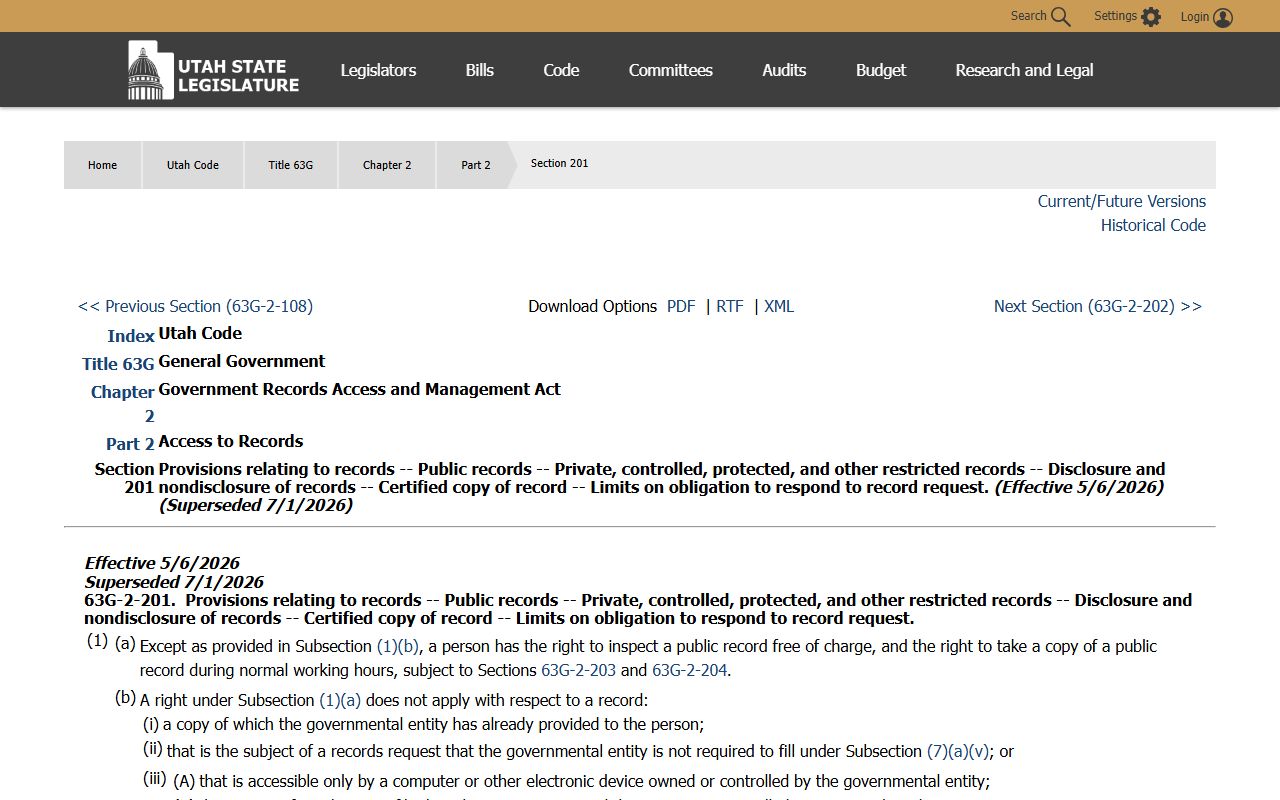
Utah Code 63G-2-201 spells out the right to inspect and copy public records, the legal base for a jail-records request, though some records stay private.
A valid request needs specific details, and a separate section lists them.
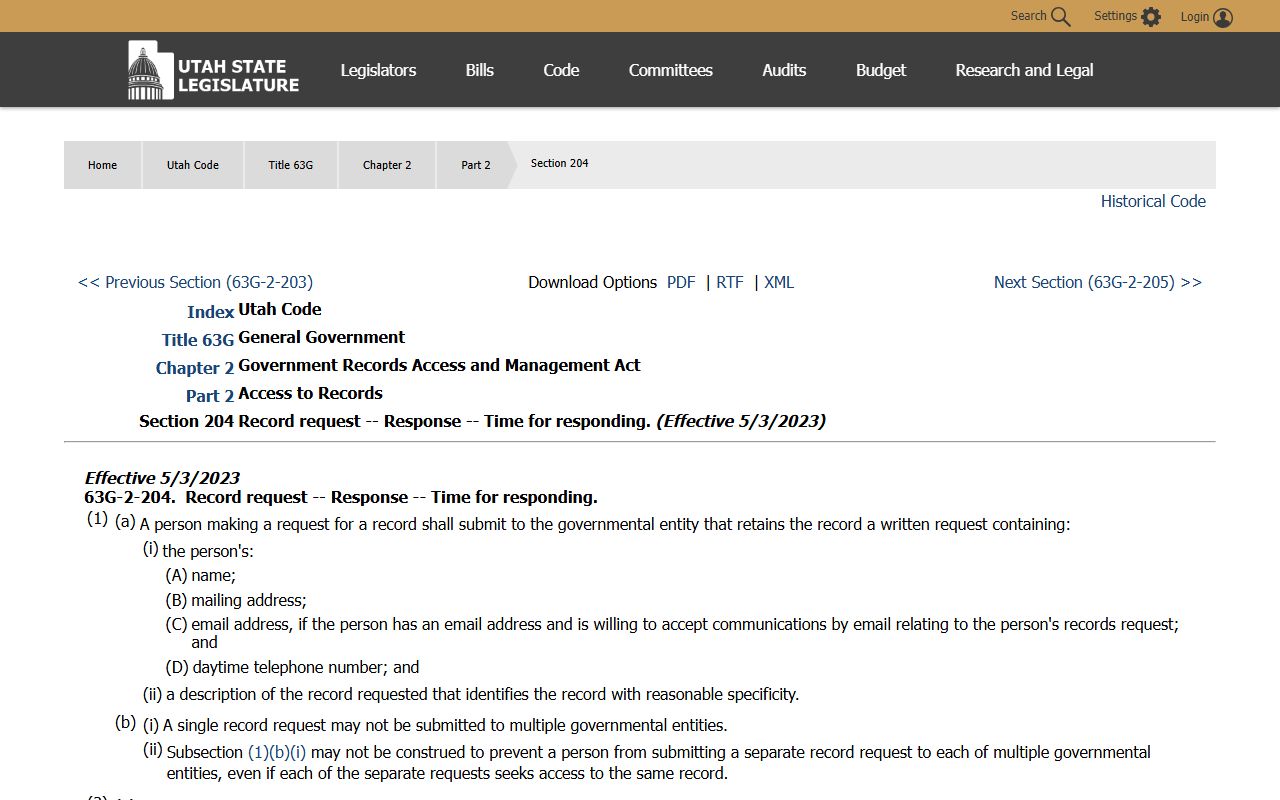
Utah Code 63G-2-204 sets the request requirements and response timeline; the Sheriff's GRAMA form quotes it and asks for a name, address, phone, and a clear description of the records.
Records cost money to produce, and the fee rules live in their own section.
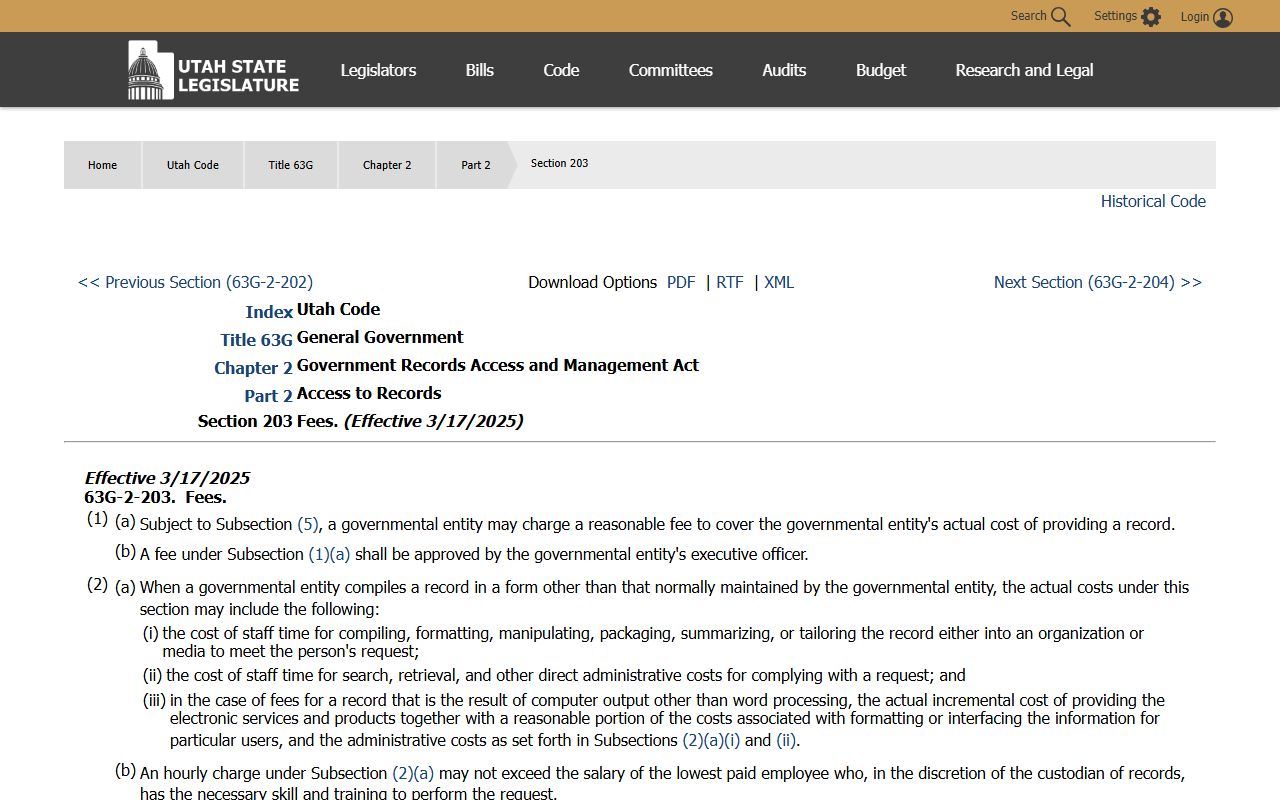
Utah Code 63G-2-203 governs the fees an agency can charge; expect redaction of personal identifiers for people other than you, and bring a photo ID before records are released.
- Download the Sheriff Corrections Bureau GRAMA Request for Records form.
- Give your name, mailing address, daytime phone, and a specific description of the records.
- Name the inmate and add a date, time, or location if you can.
- Sign the form and show a government photo ID before records are released.
- Call the records line at (385) 468-8870 with questions about a jail-records request.
Federal Custody and Cases
County jail records do not cover federal custody. People held on federal charges are not booked into the Salt Lake County jail the same way, and federal cases run through a separate system. Federal crimes in Utah are charged by the U.S. Attorney's Office for the District of Utah.
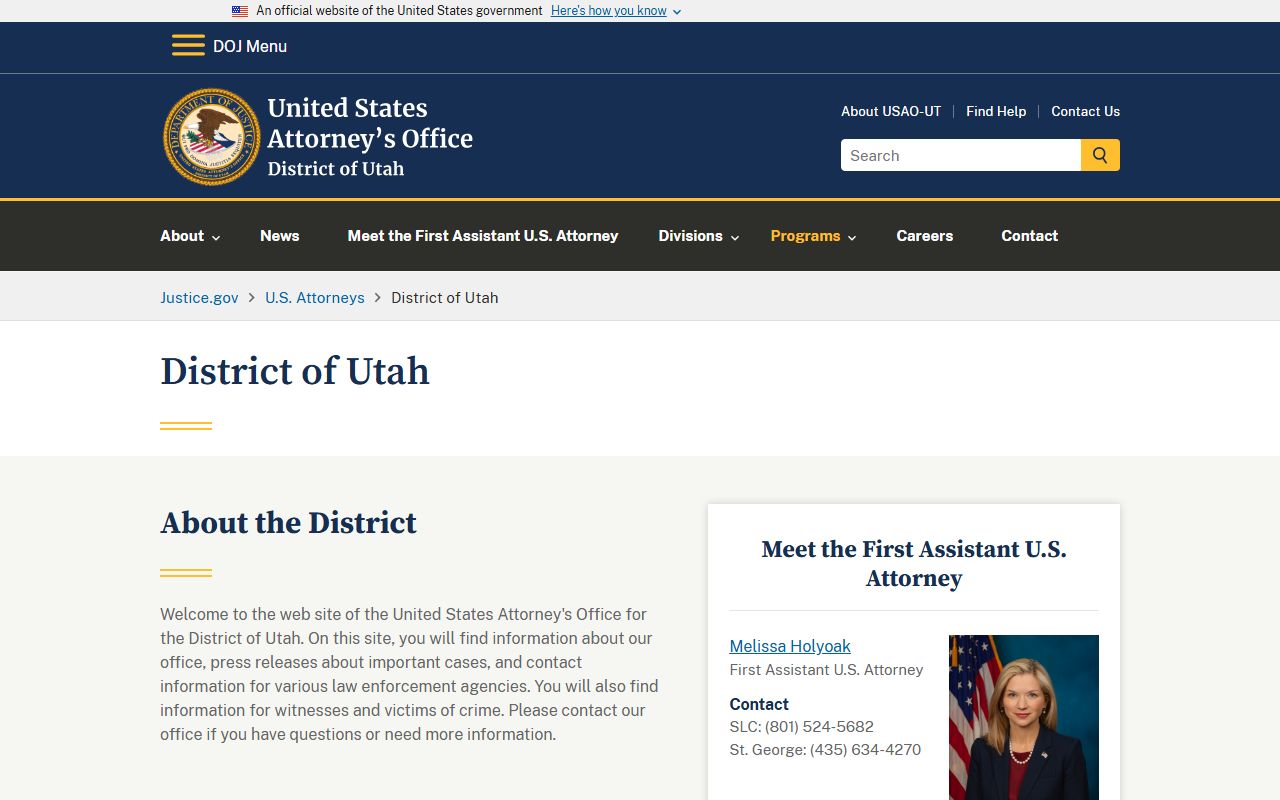
The U.S. Attorney's Office for the District of Utah prosecutes federal crimes, and its cases move through the federal court, not the county jail roster.
Federal appeals from Utah go up one more level.
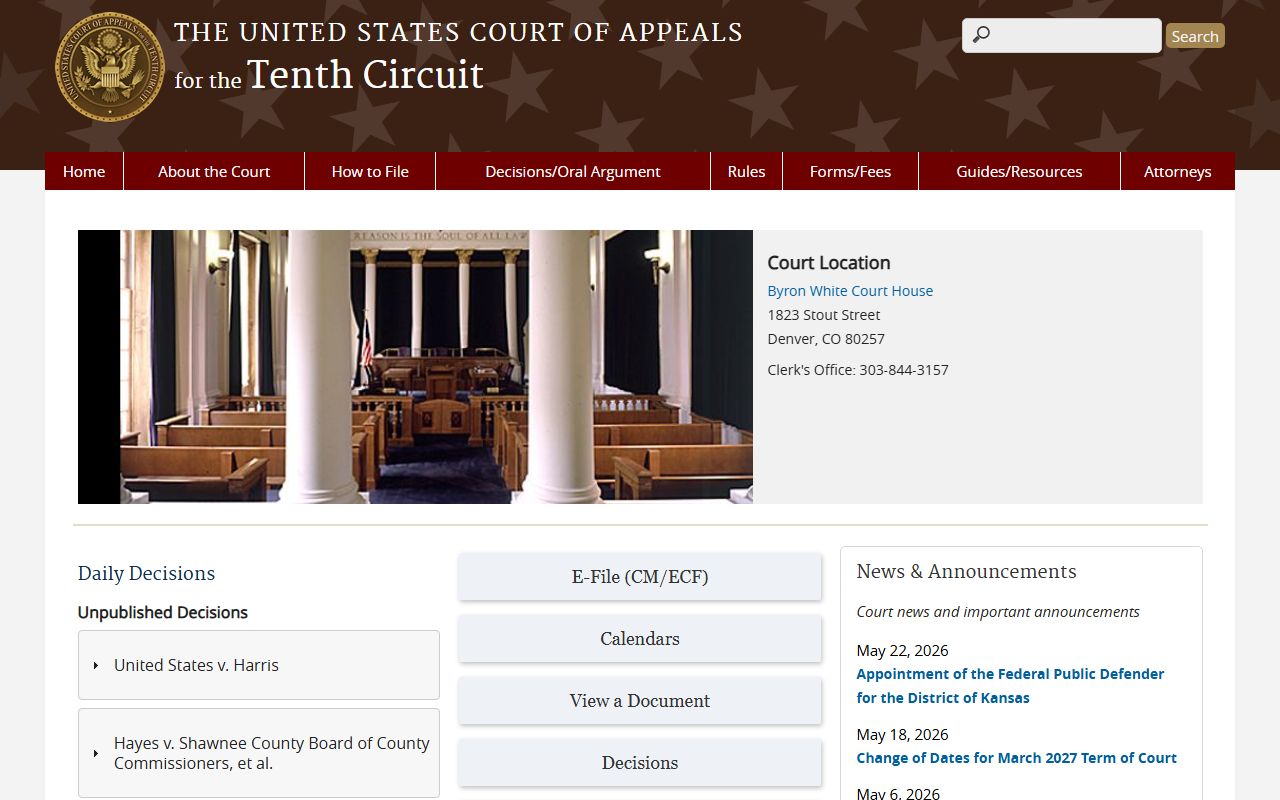
Appeals from Utah's federal court go to the U.S. Court of Appeals for the Tenth Circuit; for a person in federal prison, the Federal Bureau of Prisons locator is the right tool, not the county roster.