
About the Clerk of Court in Salt Lake County
In Salt Lake County, court case files are kept by the Utah State Courts through the Third District Court clerk operation at the Matheson Courthouse. This is the office people mean when they say clerk of court. It manages the court's civil, criminal, family, and probate files, schedules hearings, and issues certified copies of court documents. It is staffed by state court employees, not an elected county clerk.
Third District Court Clerk, Matheson Courthouse
450 South State Street
Salt Lake City, UT 84111
(801) 238-7300
Mon-Fri, 8:00 AM-5:00 PM
The Matheson Courthouse downtown is the hub for Third District court records in the county. The same complex houses the State Law Library and public XChange terminals, so the building is both the filing center and a place to read court records for free.
Salt Lake County sits in Utah's Third Judicial District, which also serves Summit and Tooele counties. That means the clerk operation at Matheson handles a heavy share of the state's court filings, from felonies to family cases.
What the Clerk of Court Does in Salt Lake County
The court clerk's job centers on the case file. The office accepts filings, keeps the official record, maintains the docket, and issues court documents to the public and the parties. It also handles certified copies, which carry the court's seal and are the version accepted for legal use.
What the court clerk does not do is just as important. It does not issue marriage licenses, run elections, or process passports. Those are county clerk functions. The court clerk also does not keep jail or arrest records, which sit with the Sheriff. For the underlying case search, the public uses Utah Courts XChange, covered on the Salt Lake County court records page.
Inside a case file, the clerk keeps a lot. Public court records can include the case file itself, the index, served arrest warrants, exhibits under the court's control, financial records, and the official minutes and audio of open hearings. The clerk also tracks each event on the docket, which is the running list that a public search displays as case history.
So the office is narrow but central: it is the keeper of the court file. Get the role right and you save a wasted trip to the wrong counter.
Court Clerk vs the Salt Lake County Clerk
This is the split that confuses people most. The Clerk of Court keeps court records. The Salt Lake County Clerk is a separate elected office under Lannie K. Chapman that handles marriage, elections, passports, and County Council records. They share a word in their titles and nothing else in their duties.
| Clerk of Court | Salt Lake County Clerk | |
|---|---|---|
| Handles | Court case files | Marriage, elections, passports |
| Records | Civil, criminal, family, probate | Marriage licenses, council records |
| Run By | Utah State Courts | Elected county clerk |
| Search Via | XChange or the clerk counter | County clerk offices and portals |
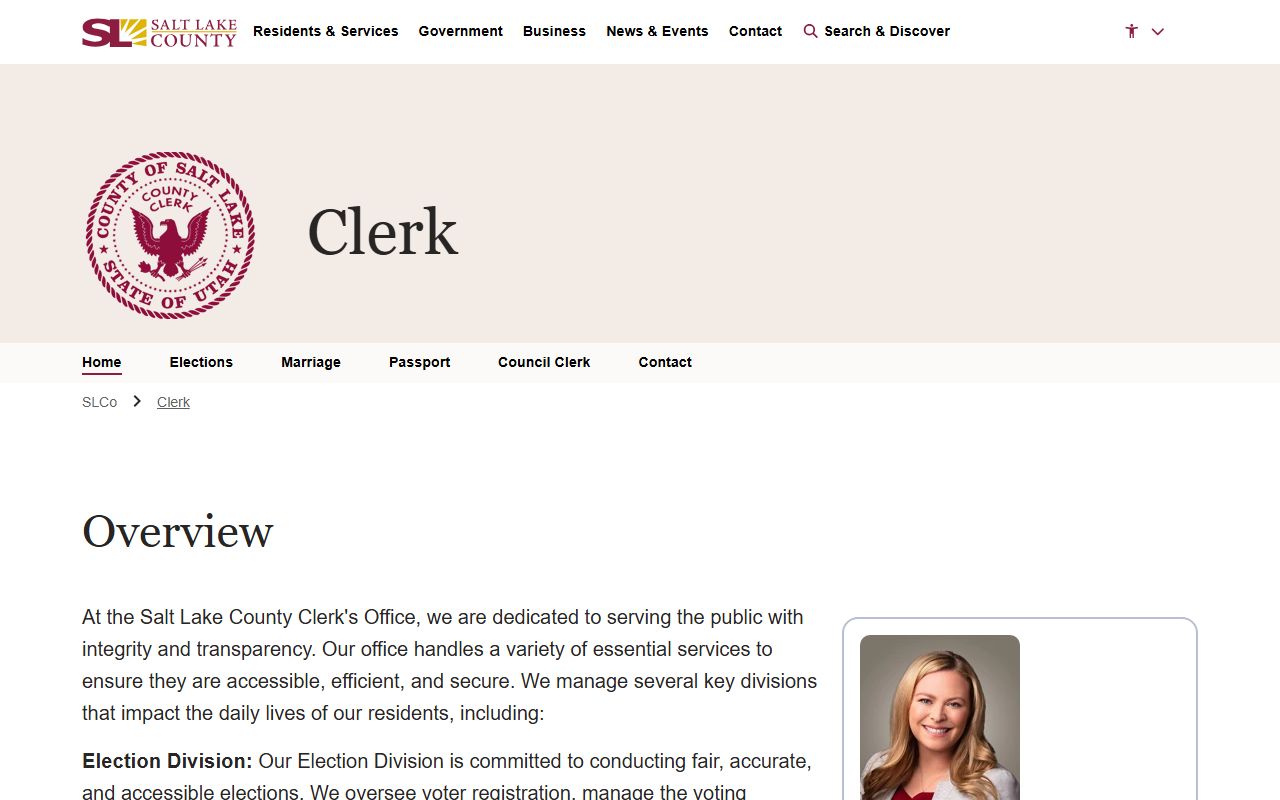
The Salt Lake County Clerk page lays out those county services, which are not court records. For the full profile of that office, see the Salt Lake County Clerk page.
Marriage is the clearest example of a county clerk function.
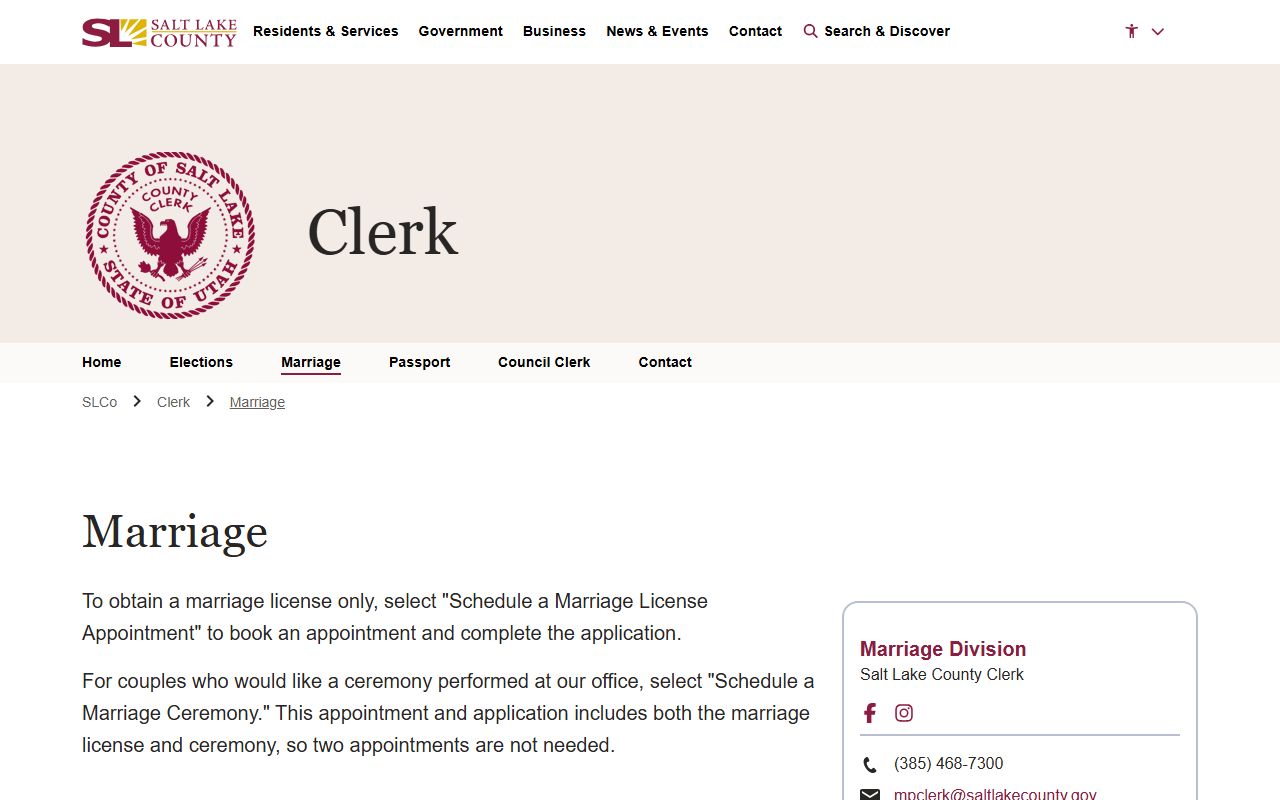
The Clerk marriage page covers licenses, copies, fees, and officiants, none of which run through the court clerk.
Marriage licenses are even booked through a separate county portal.
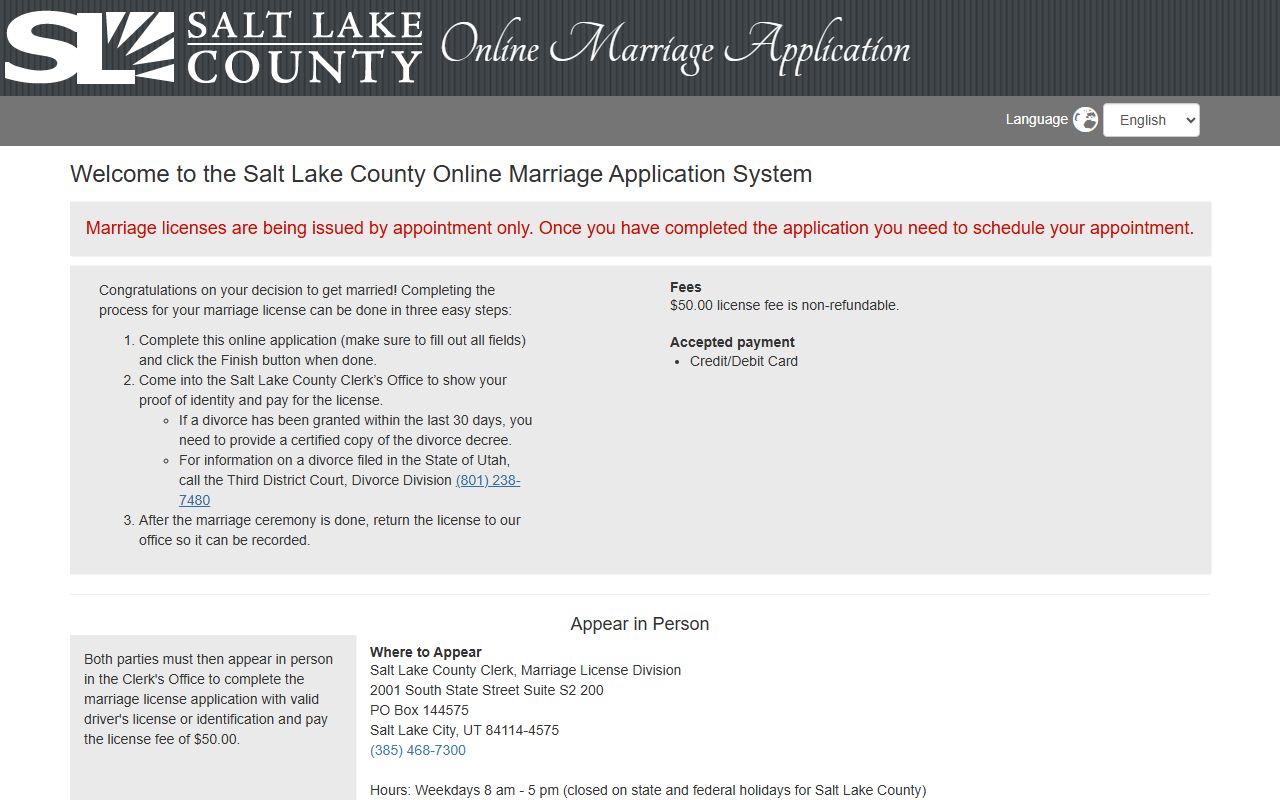
The marriage license appointment portal schedules the license, while a divorce decree still comes from the court.
Vital records add one more office to the mix.
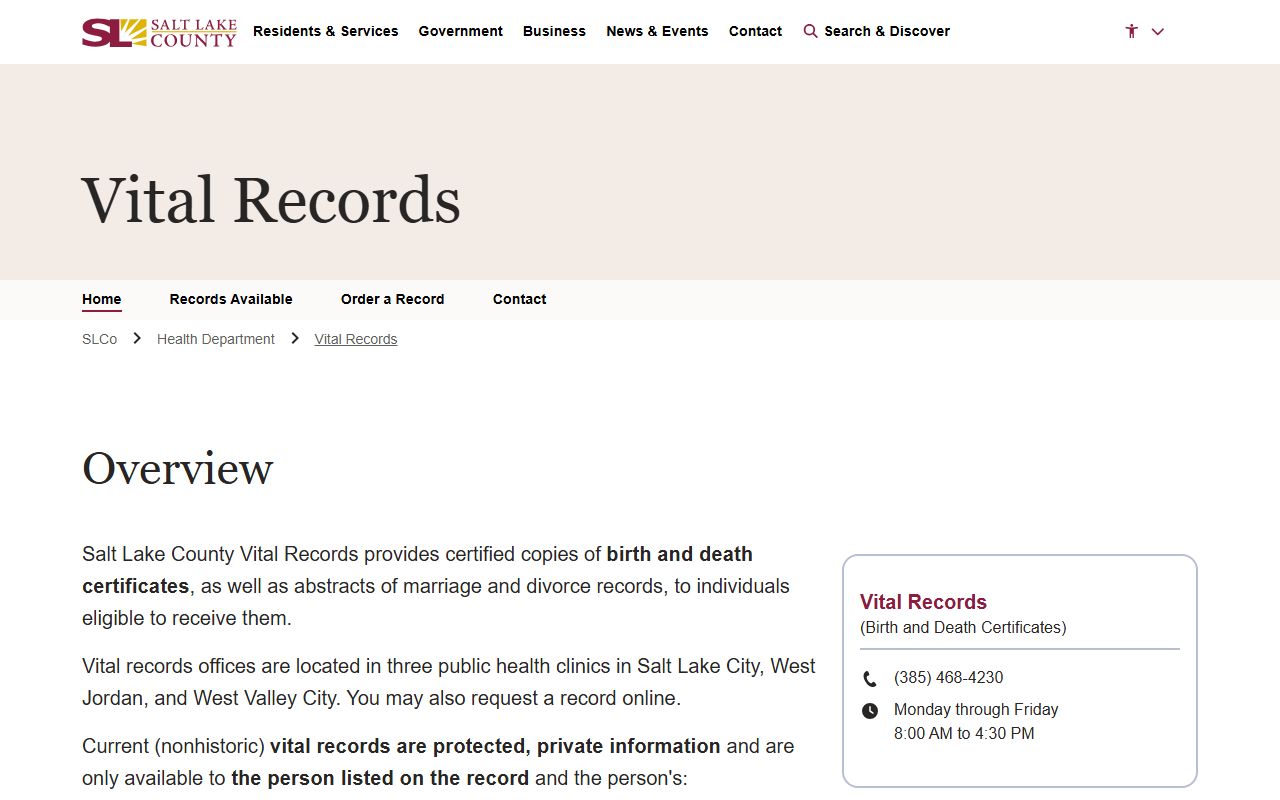
County Vital Records can issue abstracts of marriage and divorce, but the court clerk holds the actual divorce case file. So a divorce touches both worlds: the decree is a court record, while an abstract of the event may come from the county.
The practical lesson is to aim your request at the right office from the start. Ask the court clerk for anything tied to a case number, and ask the county clerk for marriage, voter, or passport services.
How to Request a Salt Lake County Certified Copy
A certified copy is a court document stamped with the court's seal, which agencies and other courts accept as official. You get one from the court clerk that holds the case. The steps are simple once you have the case details.
- Find the case in Utah Courts XChange and note the case number and court location.
- Decide whether you need a plain copy or a certified copy with the court seal.
- Contact the Third District Court clerk at the Matheson Courthouse, in person or by the court's process.
- Identify the document you want and request certification if it is for legal use.
- Pay the copy and certification fee set by the Utah Courts fee schedule.
An online XChange document can be pulled for a small fee, but for a sealed, certified, or older record, the clerk counter is the right stop.
A certified copy matters when an outside body needs proof. A bank, an employer, a school, or another court may require the sealed version rather than a printout. For your own reference, a plain copy is usually enough, so ask for certification only when an agency tells you it is needed.
Older and Archived Salt Lake County Court Records
Not every record stays at the courthouse forever. Recent and active cases live with the Third District Court clerk, but Utah Courts says historical court records more than 50 years old are often held by the Utah State Archives. So a very old case may take a different path than a current one.
If a search comes up empty for an old matter, the record may have moved to the Archives rather than vanished. Start with the clerk for a recent case, and turn to the Archives for a decades-old file. The clerk's staff can often tell you whether a record is still on-site or has been transferred.
Salt Lake County Court Records Fees
Court copy fees are set by the Utah Courts, not the county. An online document has a flat fee, while certified copies and other services follow the court's published schedule. A fee waiver may be available for those who qualify.
| Item | Fee |
|---|---|
| XChange document | $1.00 each, where available |
| Plain copy | Per the Utah Courts fee schedule |
| Certified copy | Per the Utah Courts fee schedule |
| In-person XChange terminal | Free at the courthouse and State Law Library |
| Fee waiver | May be granted by motion |
One cost surprise catches people: each click of the Search button on a paid XChange account is billable, and a document pull is a separate charge. The free terminals at the courthouse and the State Law Library avoid both, which is why many people do the search on-site and only pay for the copies they truly need.
Note: Online subscriber searches on XChange are billable, while courthouse terminals give free public access.
Salt Lake County Records and GRAMA Requests
For a non-court record held by a county agency, the path is a GRAMA request, not a court copy request. The county runs an online portal that routes a request to the right office.
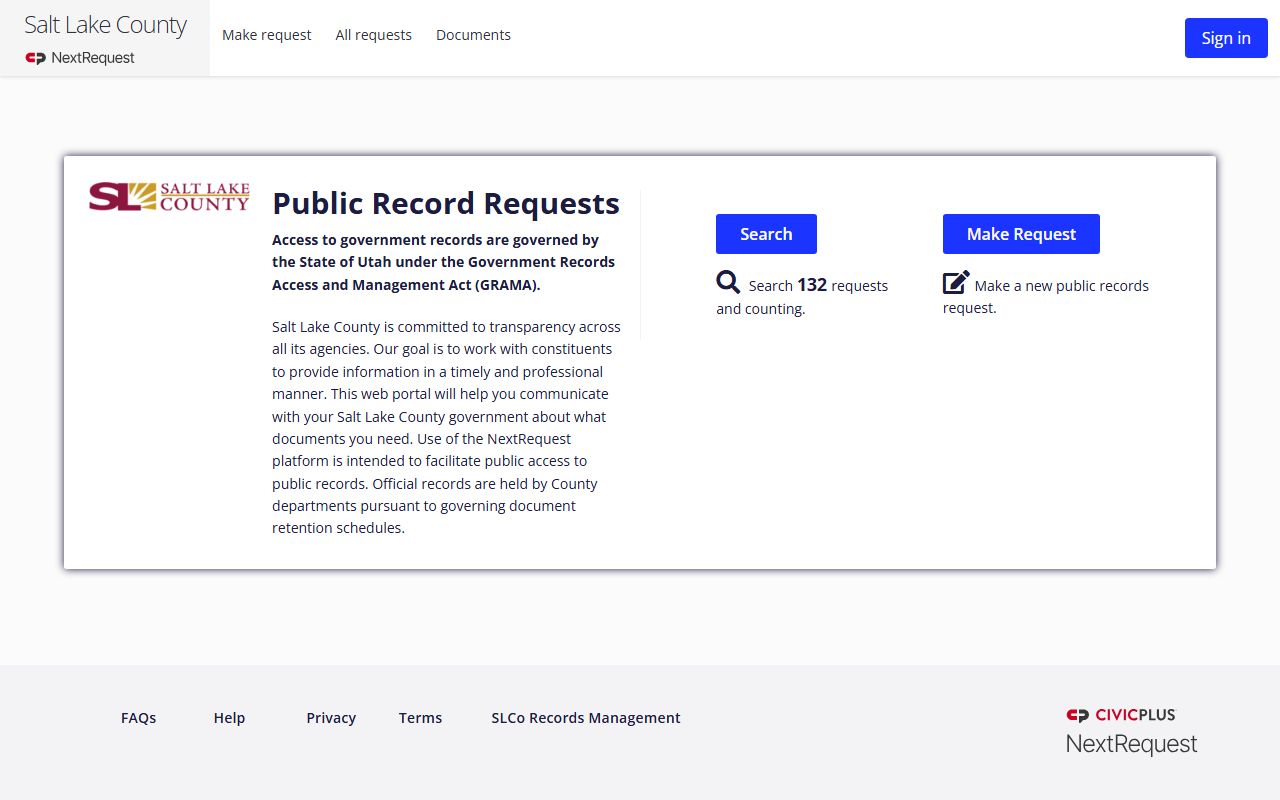
The county NextRequest portal takes online GRAMA requests, and each request still needs the agency and a clear record description. A written GRAMA request asks for a set of standard details.
| Field Label | Required | Notes |
|---|---|---|
| Requestor name | Yes | Include a business name if it applies. |
| Mailing address | Yes | Required for a GRAMA request. |
| Daytime phone | If available | For contact about the request. |
| Description of records | Yes | Identify records with reasonable specificity. |
| Agency or office | Yes | Name the office that holds the record. |
| Signature | Yes | Requester certification. |
If you are unsure which office holds a record, the county can point you the right way.
The Records Management contact page explains agency routing, and the full process is on the Salt Lake County public records page.
The key rule is to match the request to the holder. A court file goes to the court clerk, a marriage license to the county clerk, and a jail record to the Sheriff. Sending a GRAMA request for a court file to a county agency only bounces it back, so confirming the right office first saves a step.