
Arrest Records in Salt Lake County
Arrest records in Salt Lake County come from law enforcement. The Salt Lake County Sheriff's Office, led by Sheriff Rosie Rivera, runs the county jail and books people arrested across the county. City police agencies make arrests too, but the bookings funnel into the county jail system. An arrest record marks that booking. It can list the charges at arrest, the booking date and time, and the custody status. Booking itself takes a while. The Sheriff's Office says the average booking runs 6 to 8 hours, and longer if a person is intoxicated or cannot be processed right away.
An arrest record is not the same as a court record or a conviction. The arrest record sits with the Sheriff. The court record starts later, when a prosecutor files charges in the District Court or a Justice Court. A conviction, if any, comes at the very end, after a plea or a verdict. For the full case file, with pleadings, motions, and the final disposition, use Salt Lake County court records. This page stays on the arrest and booking side.
How to Search Salt Lake County Arrest Records
The fastest way to check a recent arrest is the county jail roster. The Sheriff's Office runs an online Inmate Lookup tool and a Jail In/Out Docket that shows recent bookings and releases. The lookup searches by name or by an identifier such as a booking number. State tools come next for a person already sentenced to prison.
- Open the Salt Lake County Inmate Lookup tool and choose to search by name or by an identifier.
- Enter a first and last name, and add a birth date to narrow common names.
- Or pick an identifier like Booking Number, Permanent Number, or State ID, then enter the value.
- Check the Jail In/Out Docket for a very recent booking that may not show up elsewhere yet.
For a person who has moved past the county jail, the Utah Department of Corrections runs an offender search for people in state prison or on parole. Its inmate services pages tie together offender search, visitation, and program details.
The Utah Department of Corrections keeps an offender search for people in state custody.
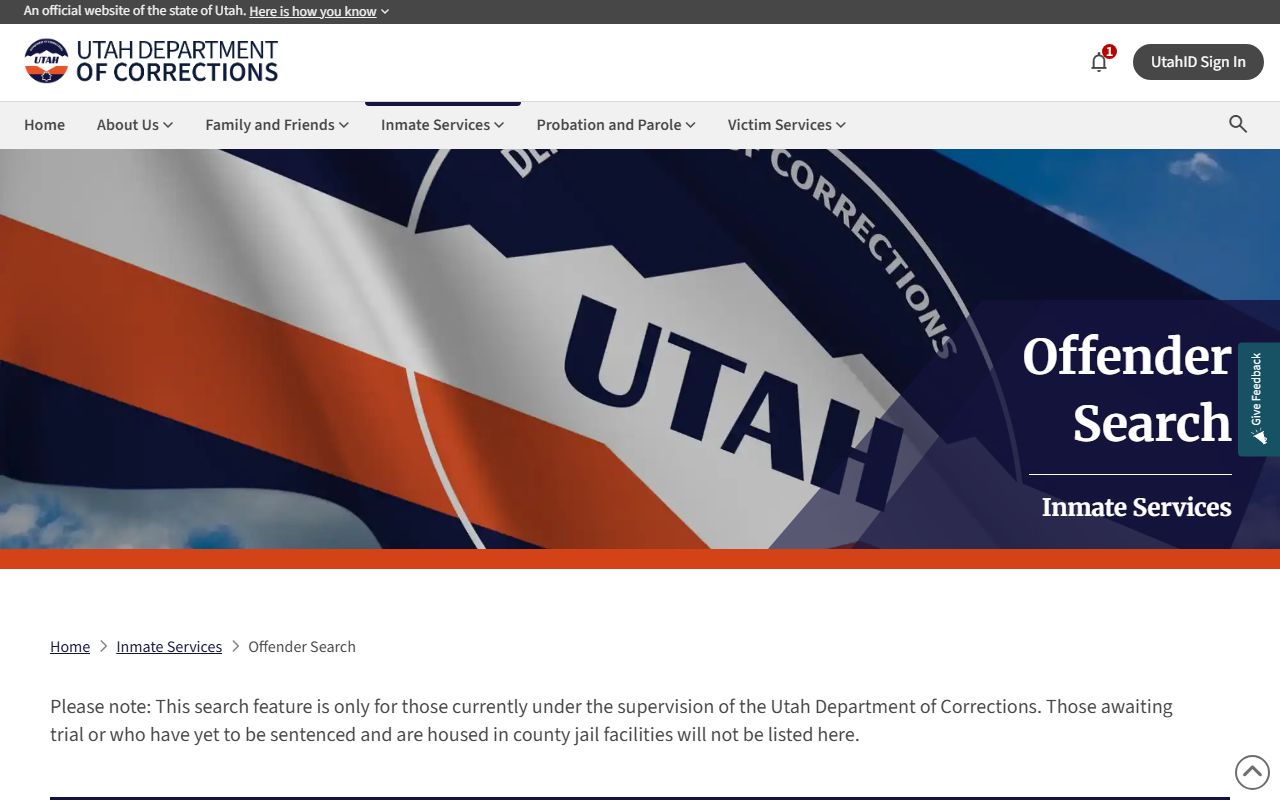
That offender search covers prison and parole, which is different from a short county jail booking.
The same agency runs an inmate services hub that links visitation, programs, and health information.
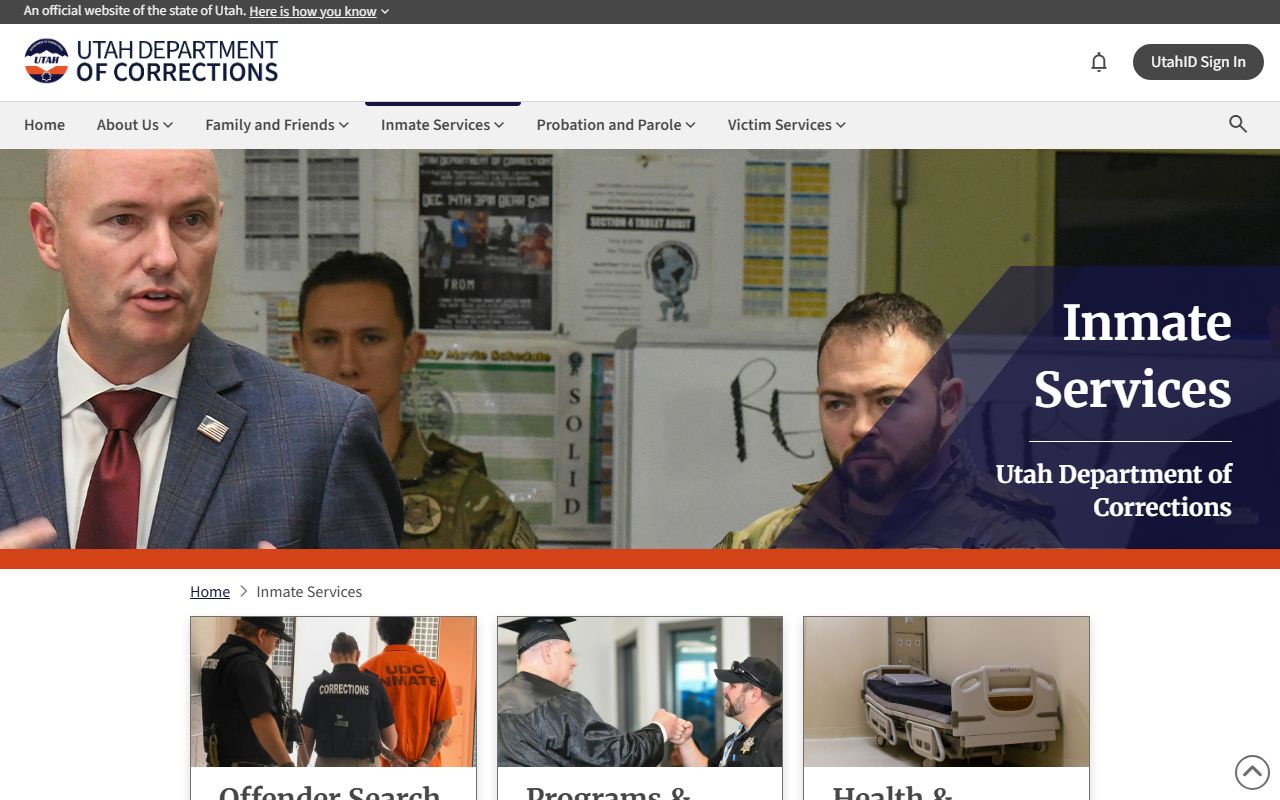
Use the inmate services page when an arrest has led to a state prison sentence rather than a brief jail stay. To dig into a current booking, see Salt Lake County inmate records.
What a Salt Lake County Arrest Record Shows
An arrest or booking record packs a lot into a short profile. The county jail lookup confirms a core set of search and result fields, and Utah privacy law trims some personal details from the public view. The table maps the common fields to what each one tells you.
| Field | What It Shows |
|---|---|
| Name | The booked person's first and last name. |
| Booking Number / SO# | The jail's case number for that booking. |
| Permanent Number | A lasting ID tied to the person across bookings. |
| State ID | A statewide identifier used to match records. |
| Booking Date | When the person was booked into the jail. |
| Charges | The offenses listed at the time of booking. |
| Custody Status | Whether the person is still held or has been released. |
| Docket Event | The Jail In/Out entry for a booking or a release. |
Some details are pulled to meet state privacy rules, so a public roster entry may show less than a full booking file. A release date is one thing the jail will not post; staff say to ask the prisoner instead.
Salt Lake County Arrest Records vs. Court Records
People mix up these two records all the time. An arrest record captures the moment of booking. A criminal court record captures the case that may follow. One sits with the Sheriff, and the other sits with the court. The table sums up the split.
| Arrest Record | Criminal Court Record | |
|---|---|---|
| Source | Sheriff or police | Court, through Utah Courts |
| Created When | At booking | When charges are filed |
| Contents | Booking data, arrest charges, custody status | Pleadings, motions, pleas, disposition |
| Where to Search | County jail roster | Utah Courts XChange |
Charges vs. Convictions in Salt Lake County
A charge is an accusation. A conviction is a result. The gap between them matters, because many arrests never end in a conviction. Charges get reduced, dropped, or dismissed. Reading an arrest record as proof of guilt is a common and costly mistake.
| Charge | Conviction | |
|---|---|---|
| Stage | Accusation at or after arrest | Verdict or accepted plea |
| Burden of Proof | Probable cause | Beyond a reasonable doubt |
| Public Record | Usually yes | Usually yes |
| What It Means | A case is starting or pending | The court found or accepted guilt |
Always read the disposition before you judge a record. A booking line with no outcome tells you very little.
Sealed vs. Expunged Records in Utah
Some Salt Lake County arrest and criminal records get closed off. Utah uses two main ideas here, sealing and expungement, and they are not identical. Sealing restricts access to a filing or a case, usually by court order. Expungement runs through Utah Code 77-40a and removes a qualifying criminal record from public view. In plain terms, both pull a record out of public search, but expungement is a defined statutory process.
| Sealed Record | Expunged Record | |
|---|---|---|
| Definition | Access restricted by court order | Public access removed under Utah Code 77-40a |
| How It Starts | Petition or rule in the case | Eligibility certificate from BCI, or Clean Slate |
| Who Can Still See It | Court, parties, authorized persons | Court and agencies authorized by order or statute |
| Effect | Hidden from public inspection | Confidential and restricted from public view |
Utah's adult expungement process starts with eligibility, and the Bureau of Criminal Identification, BCI, issues the certificate most petitions need.
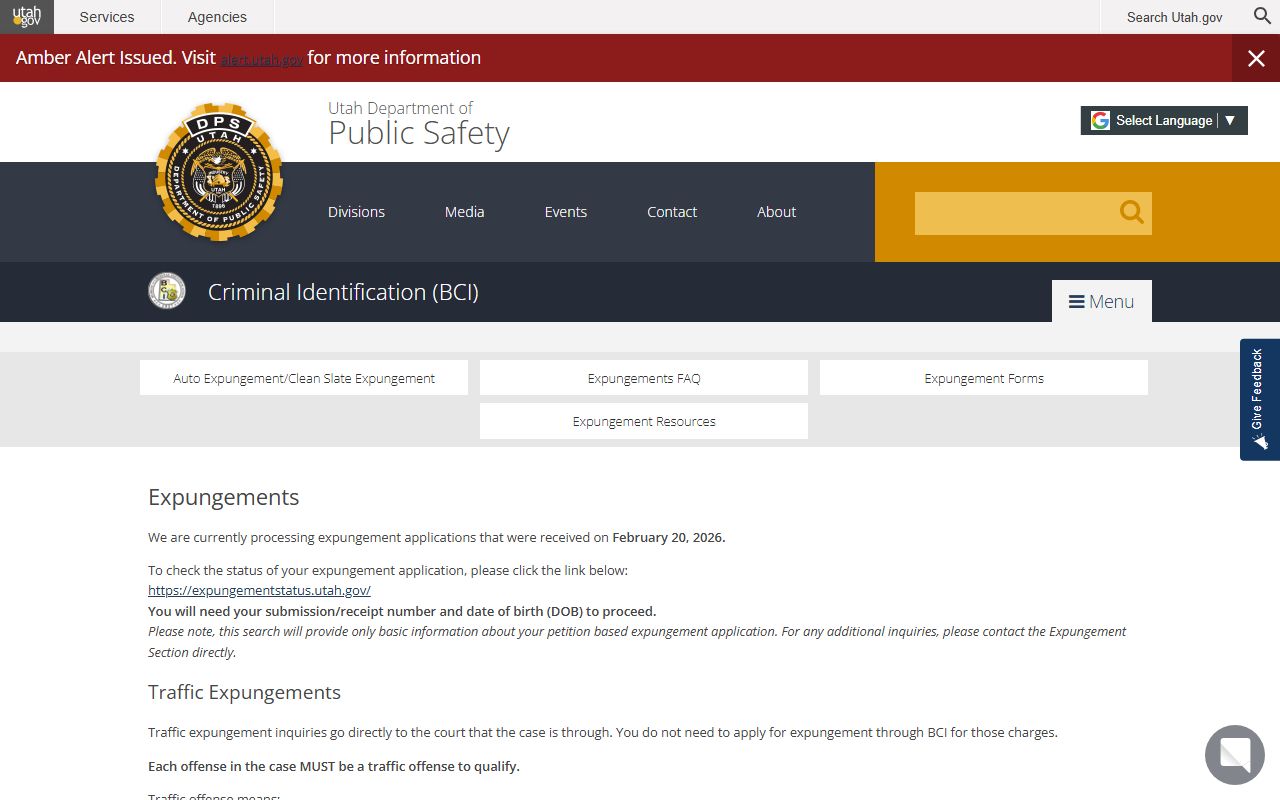
The BCI expungements page holds the certificates, forms, and the statutes, and it lists which offenses cannot be expunged.
Utah also runs an automatic option called Clean Slate, which can clear some cases without a full petition.
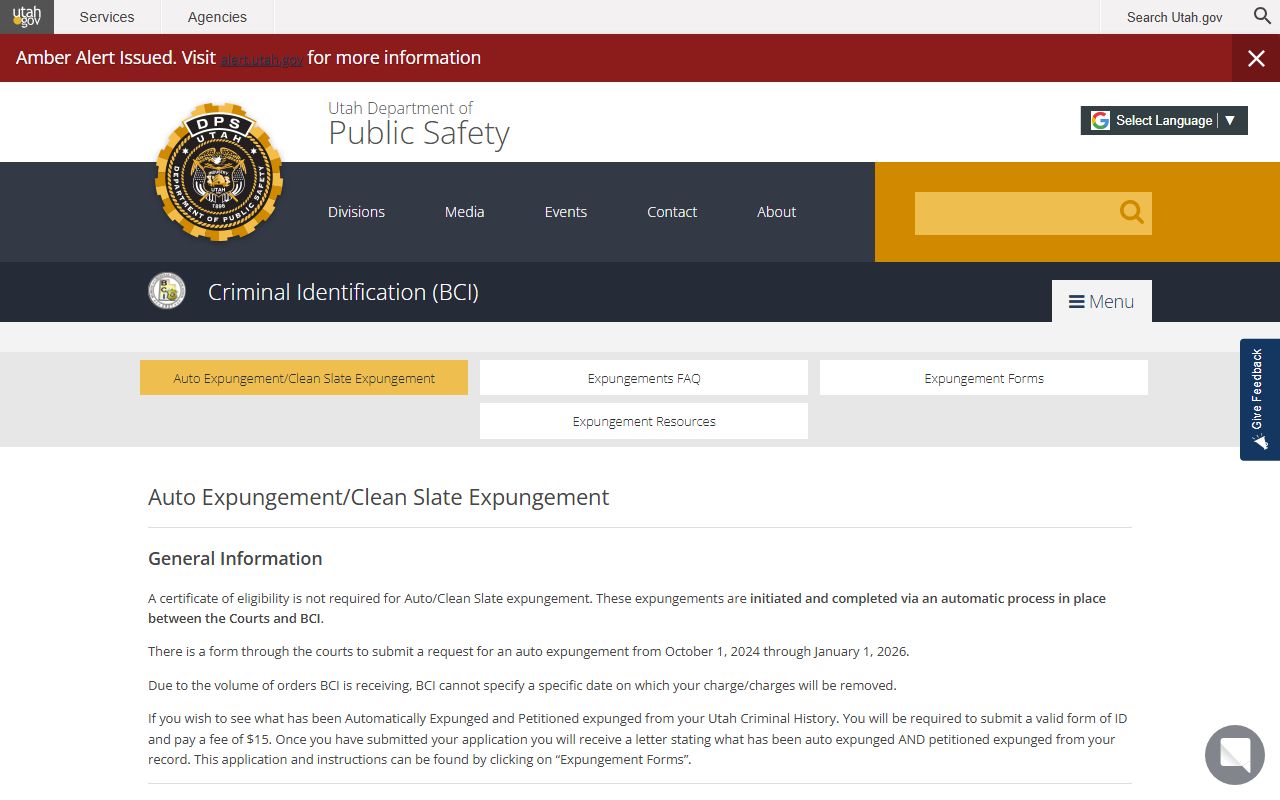
The clean-slate page explains automatic expungement; between late 2024 and the start of 2026, an eligible case needs a form filed with the court to receive a Clean Slate expungement.
Salt Lake County Mugshots and Booking Photos
Mugshots are a common request, but Salt Lake County does not run a public mugshot gallery. The county jail roster removed certain personal identifiers to follow state privacy law. The roster notice cites Utah Code 63A-19 sections and a 2022 county policy. So a booking may appear without the photo and personal details that people expect to see.
Be careful with private mugshot sites. They are not official, they often charge to take a photo down, and they fall outside this site's scope.
Statewide Criminal Records and Salt Lake County
A county jail roster only shows who is in custody now. For a person's wider criminal history, Utah relies on BCI, the state's criminal records agency. BCI handles criminal history checks, warrants, and the sex offender registry. A full criminal history check through BCI has its own forms and fees, and it is not an open public name search.
BCI also hosts the free statewide warrant tool, since an open warrant is part of a person's current criminal status.
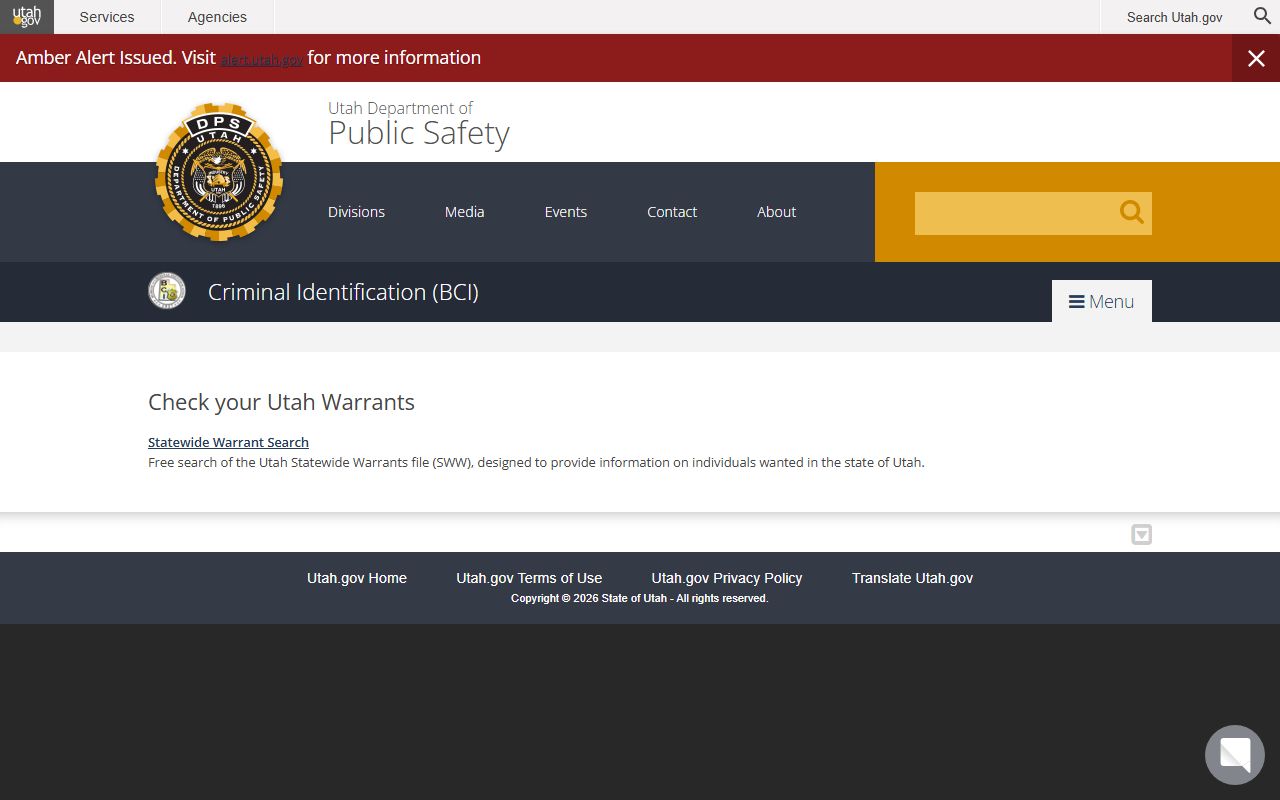
The BCI warrant page is the official route to check whether a name has an active Utah warrant.
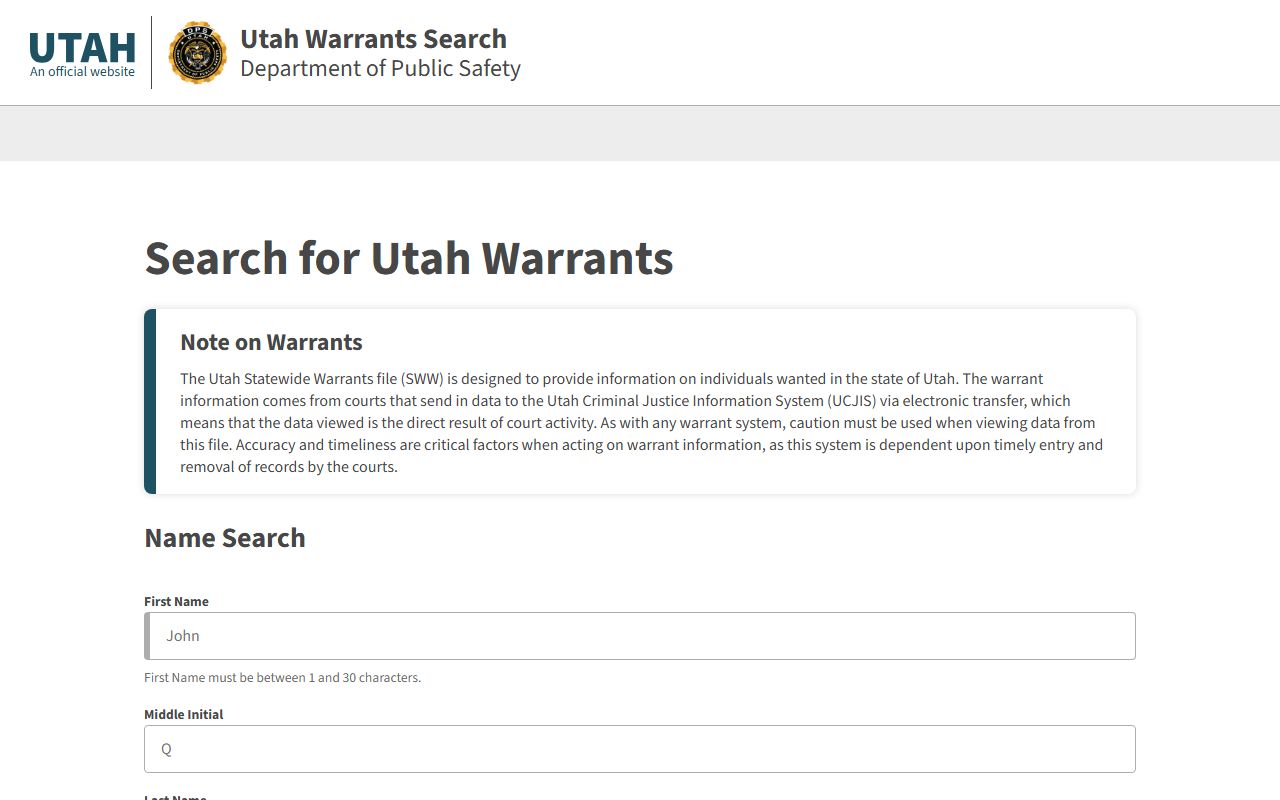
That link opens the Utah Statewide Warrants Search, a free name-based tool; for warrant types and how to clear one, see Salt Lake County warrant records.
Background Checks and Salt Lake County Arrest Records
There is a real line between a casual lookup and a formal background check. A check used for a job, an apartment, credit, or insurance falls under the federal Fair Credit Reporting Act, the FCRA. Those checks have to follow strict rules on accuracy, consent, and dispute rights. A quick name search on a public roster does not meet that standard.
For a true screening, use a licensed, FCRA-compliant provider. For an official criminal history, use BCI.
Important: This site is not a consumer reporting agency under the FCRA, and its information must not be used for credit, employment, tenant, or insurance decisions.
Restricted Criminal Records in Salt Lake County
Several kinds of arrest and criminal records stay restricted in Salt Lake County. Juvenile records are not treated like adult records, so general public search is blocked, though victims have limited access under Utah Code 80-6-604. Sealed cases need a court order to open. Expunged records drop from public view. Ongoing investigations can be withheld as protected records under GRAMA, the state open-records law.
If a person facing charges cannot afford a lawyer, the Salt Lake Legal Defender Association represents indigent adults in the county's District Court and Justice Courts.