
How to Search Salt Lake County Court Records
The primary portal is Utah Courts XChange, the state's public case-information clearinghouse. It reaches District Court and Justice Court cases statewide, including Salt Lake County. Utah Courts describes XChange as subscription-based for online users, with free public access at courthouse terminals and the Utah State Law Library. Each click of the Search button is billable for paid accounts, and the system returns up to 500 results at once.
Before you begin, collect a last name, a company name, a case number, or a citation number. Case numbers are not unique across Utah, so pair them with a county or a court. The Salt Lake County jury and court contact page lists the Matheson Courthouse address if you plan to visit a public terminal.
For the courthouse address and visitor notes, see the Salt Lake County court contact page.
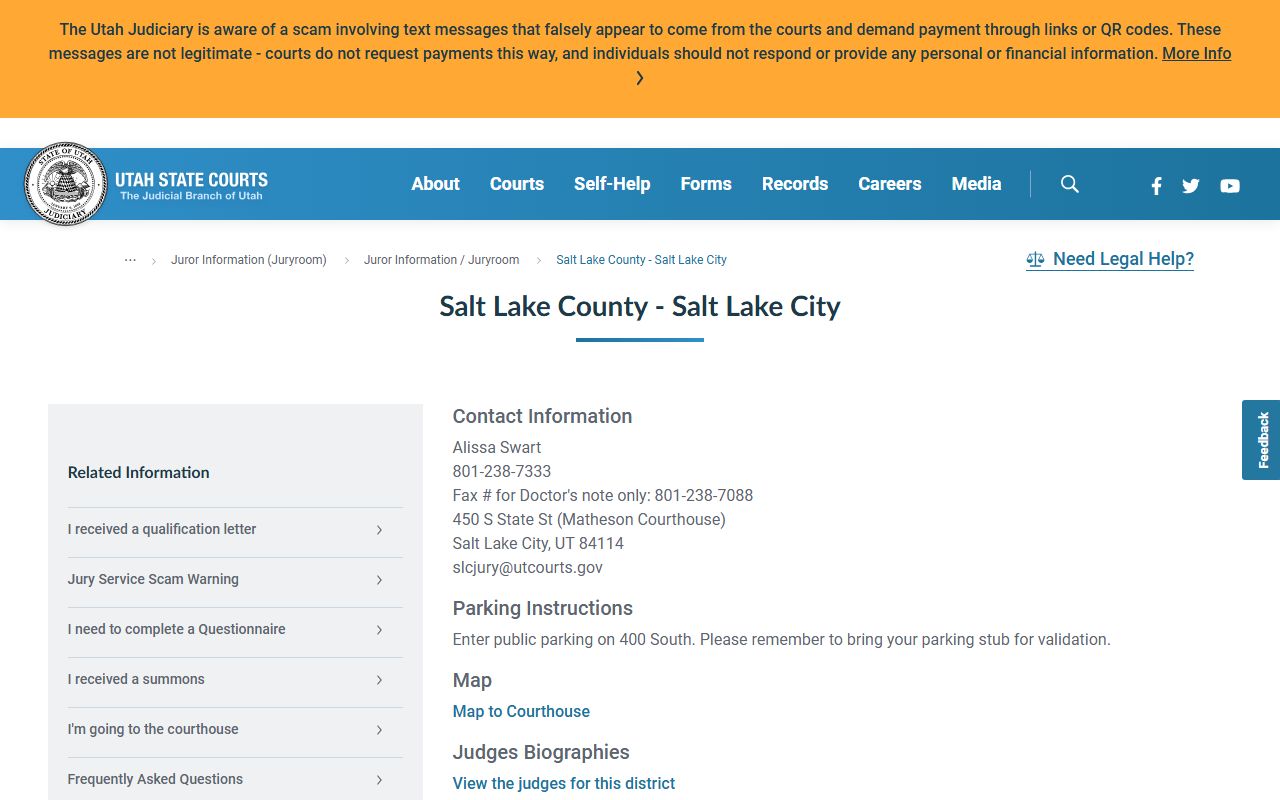
That page also covers parking, which changed in 2026 for the Matheson garage.
- Open Utah Courts XChange and choose a jurisdiction. Use District Court for felonies, divorce, probate, and major civil cases; use Justice Court for traffic, small claims, and class B or C misdemeanors.
- Enter a party last name or a case number. Add an asterisk to the first name field, like John*, to catch middle names that clerks may have entered.
- Set the search scope to Salt Lake County or a specific Salt Lake court to cut statewide false hits.
- Add a birth date for a criminal-defendant search, or a citation location for a ticket, only if the first pass returns too many rows.
- Click Search, open the case number for the full history, and pull a document for $1.00 if it is available.
XChange is not the only court tool. MyCase lets a party view their own case, which is different from the broad public search. Utah Courts also posts weekly reports of filings, dispositions, and judgments. For most public lookups, though, XChange is the right first stop, and a clerk counter can help when a record is not online.
Salt Lake County Court Records Search Fields
XChange offers more than a single name box. The official help page lists each field and how it behaves. Smart use of these fields is the difference between a clean result and 500 rows of noise. Birth dates, for example, usually appear only for criminal defendants, so do not expect one on a civil case.
| Field Label | Type | Required | Notes / Format |
|---|---|---|---|
| Jurisdiction | Radio | No | District Court, Justice Court, or both. |
| Search Type | Radio | No | All cases or judgments only. |
| Case Number | Text | No | Not unique statewide; same number can return several cases. |
| Last Name / Company | Text | For name search | Enter last name or company name. |
| First Name | Text | No | Use an asterisk wildcard, like John*, for middle names. |
| Search Scope | Dropdown | No | Statewide, by county, or by a single court. Pick Salt Lake County. |
| Birth Date | Date | No | Usually only for criminal defendants. |
| Citation Number | Text | No | Not unique statewide; narrow with citation location. |
The help page itself shows these fields and the result screen in detail.
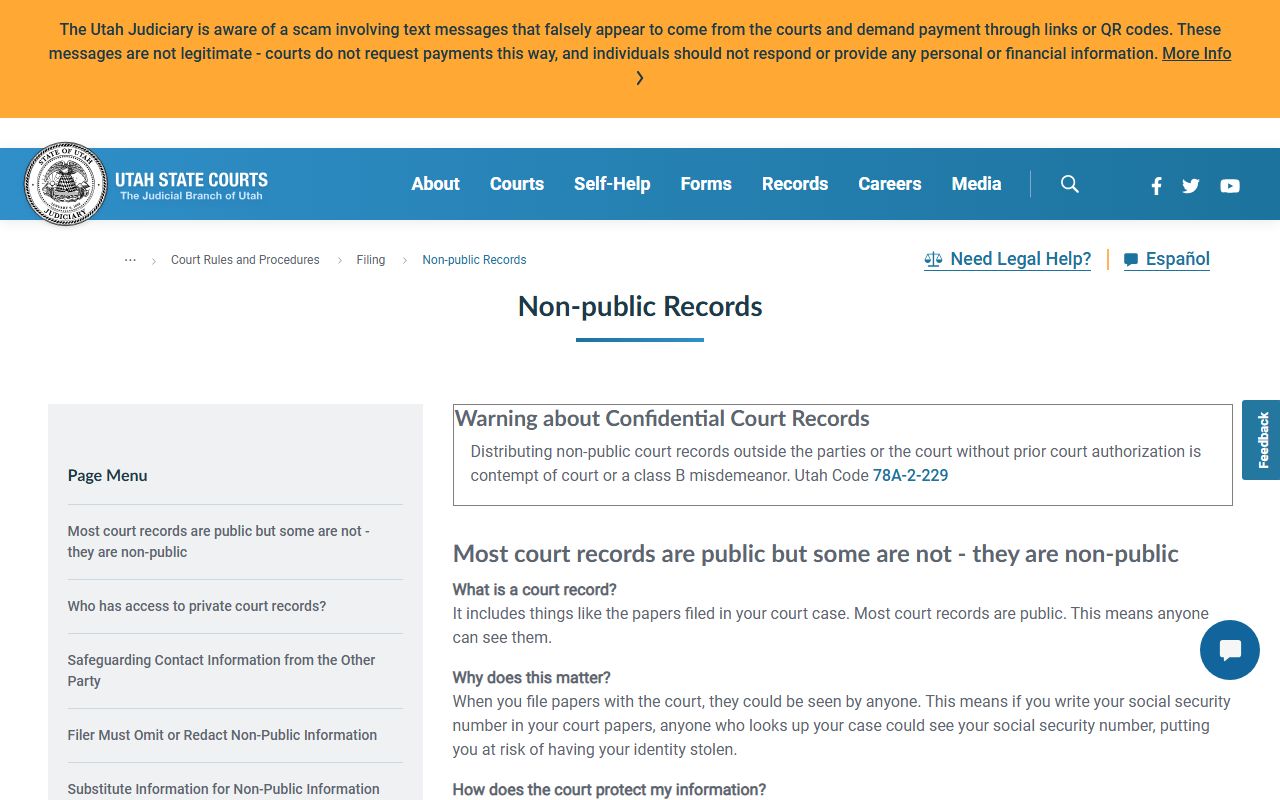
It also flags which records stay non-public, which leads into the access rules below.
Types of Salt Lake County Court Records
Court records here span civil, criminal, family, probate, and traffic matters. The District Court holds the heavier files, while the Justice Courts carry the day-to-day traffic and small claims volume. Juvenile cases sit in a separate court with tighter rules.
Knowing which court produces a record tells you where to point an XChange search.
- Civil cases: contracts, injury claims, debt, liens, garnishment, and name changes in District Court.
- Criminal cases: felony files in District Court; misdemeanors and infractions in Justice Court.
- Family cases: divorce, custody, parentage, child support, and protective orders.
- Probate cases: wills, estates, guardianship, and conservatorship inside District Court.
- Traffic and small claims: handled by the county or a city Justice Court.
The Justice Courts overview explains the limited-jurisdiction docket that carries most local traffic and misdemeanor cases.
Juvenile Court is the clearest exception, since most of its records are closed to the public.
For a docket-focused view of the same files, see Salt Lake County court dockets, and for the trial court itself, see the District Court.
What Salt Lake County Court Records Show
Open a result and XChange returns a structured set of fields. The case number even encodes the filing year in its first two digits. Financial fields can show fines, restitution, and balances, while criminal files add charges, pleas, and sentences. The table below maps the common result fields to what each one means.
| Field | What It Shows |
|---|---|
| County | The county where the case exists, such as Salt Lake. |
| Court Location | The District or Justice Court that holds the file. |
| Case Type | A code for civil, criminal, domestic, probate, traffic, or judgment. |
| Case Number | The file number; first two digits give the filing year. |
| Filing Date | The day the court opened the case. |
| Parties | Plaintiff, defendant, petitioner, or respondent names and party codes. |
| Birth Date | Shown mainly for criminal defendants. |
| Case History / Documents | A summary of events; available documents cost $1.00. |
A booking or a charge is not a conviction, so always read the disposition before you draw a conclusion.
Public Access Framework for Salt Lake County Court Records
Court records in Utah are presumed public under the Code of Judicial Administration. Rule 4-202.02 lists public files, such as case files, indexes, served arrest warrants, exhibits, and official minutes, and it also lists the records that stay closed. County agency records, by contrast, follow GRAMA. For a court file you use Utah Courts; for a Sheriff or county office record you file a GRAMA request with that agency.
Anyone may inspect a public court record, and copies follow the court's fee schedule. The state open-records right lives in Utah Code § 63G-2-201, while Rule 4-202.02 governs how courts classify their files. Public terminals at the courthouse and the State Law Library give free XChange access.
The two systems are easy to mix up. GRAMA is for county and agency records, like a Sheriff or health record, and you file that request with the agency. Court files run on the court rules instead, through Utah Courts. So a court case goes to XChange or the clerk, while a county agency record goes through a GRAMA request, covered on the public records page.
The official courthouse-access page explains the public XChange terminals and on-site record access.
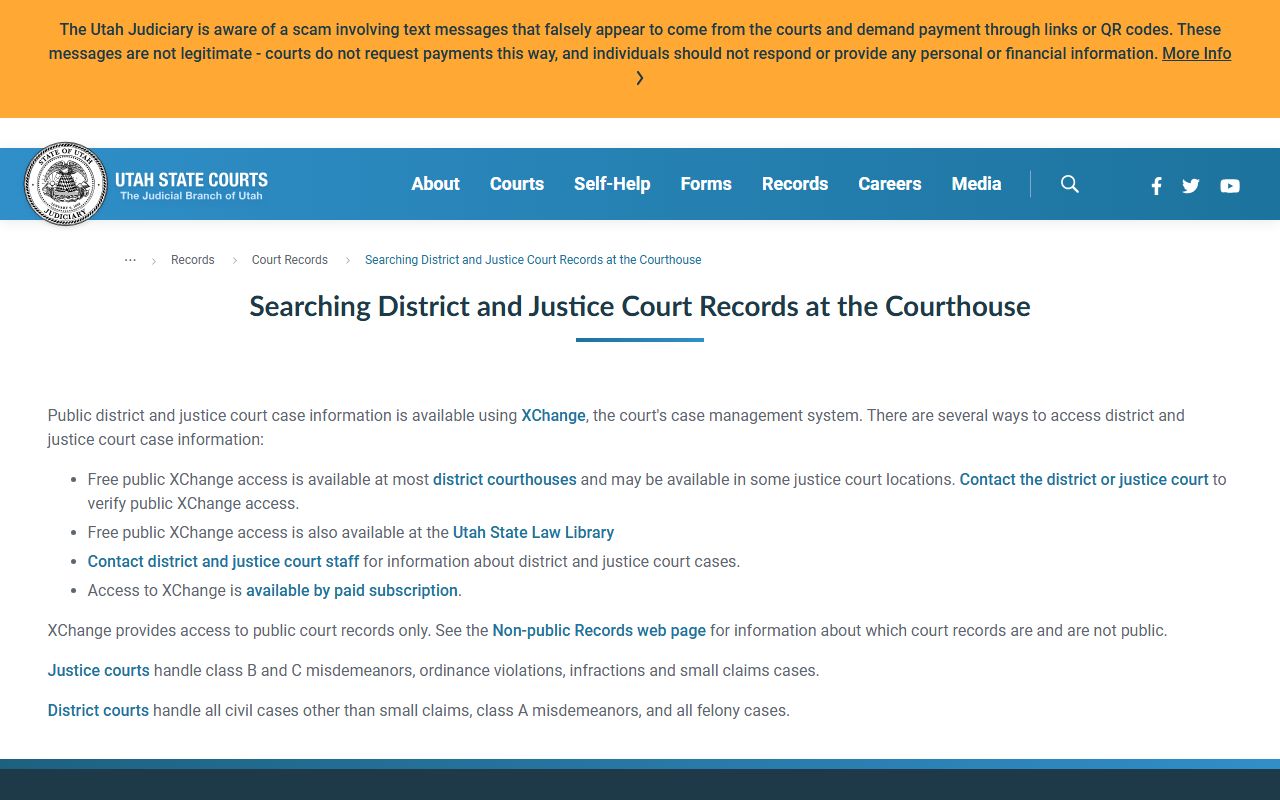
Note: Online subscriber searches on XChange are billable, but in-person searches at courthouse terminals and the State Law Library are free.
Records That Are Sealed or Confidential in Salt Lake County
Some Salt Lake County court records are off-limits to the public. Juvenile delinquency files, child-welfare reports, and adoption cases are restricted by statute. Expunged adult criminal records drop from public view after a court order under Utah Code 77-40a. Mental health and civil commitment files hold protected medical detail. Sealed filings need a court order to open.
To see a sealed or non-public record, a party or an authorized person uses the Utah Courts non-public records process and may file a petition to unseal. A crime victim can reach limited juvenile records under Utah Code 80-6-604, but that is narrower than an adult criminal search. If a search comes up empty for a case you know exists, the cause is usually a too-specific search, not a seal.
Expungement is the other reason a record disappears. Under Utah Code 77-40a, a court can seal a qualifying adult criminal case, and Utah's Clean Slate process clears some cases automatically. Once a case is expunged, it drops from public view, so a clean search does not always mean a person was never charged.
In-Person Court Record Requests
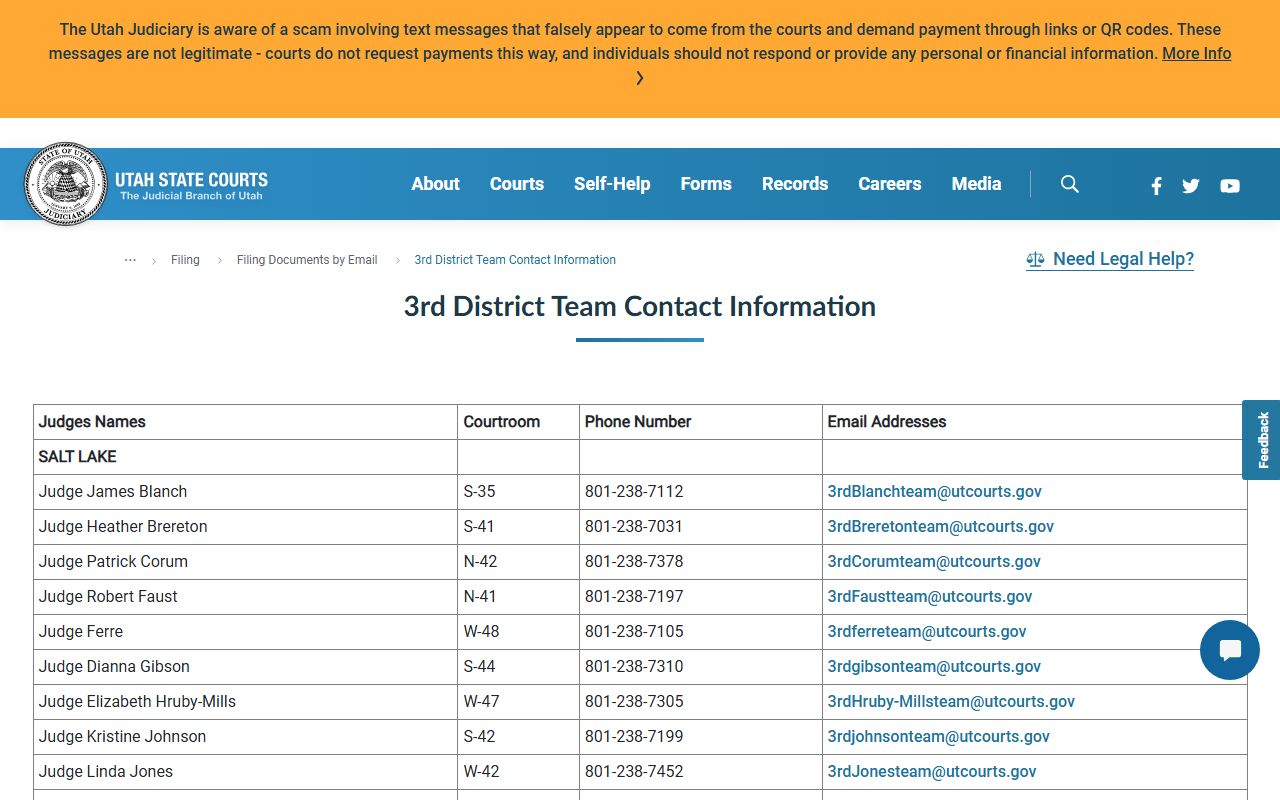
You can search and request Salt Lake County court records in person at the Matheson Courthouse downtown. Public terminals give free XChange access, and clerk counters handle copy and certified-copy requests. Bring valid ID, and plan for security screening at the entrance. The Third District also posts judge and team contacts if you need a specific courtroom or clerk team.
Third District Court, Matheson Courthouse
450 South State Street
Salt Lake City, UT 84111
(801) 238-7300
Mon-Fri, 8:00 AM-5:00 PM
The Third District judge and team contact page lists Salt Lake courtroom numbers, phone numbers, and team emails.
Older files can be elsewhere; Utah Courts says records more than 50 years old often sit with the Utah State Archives.
The clerk counter handles what the online system cannot. Staff can pull a certified copy, explain a docket entry, or point you to a record that is archived offsite. Bring the case number if you have it, since that speeds up the request and avoids a long name search at the counter. A photo ID helps too, especially for a certified copy that an outside agency will rely on.