
How to Search Salt Lake County Court Records
The main tool is Utah Courts XChange. It is the state's public case-information clearinghouse for District and Justice Court records, and it covers Salt Lake County cases along with the rest of the state. XChange is subscription-based online, but Utah Courts says free public access is offered at courthouse terminals and at the Utah State Law Library. A search counts as billable the moment you click Search, so a little planning saves money.
Before you start, gather what you know: a full name, a company name, a case number, or a citation number. Case numbers are not unique across Utah, so pair them with a county or court when you can. The official records landing page is a good first stop to confirm whether a record is online, archived, or only at a clerk counter.
To open the search portal, start at the Utah Courts records page, which links XChange, appellate records, archived files, and the court fee schedule.
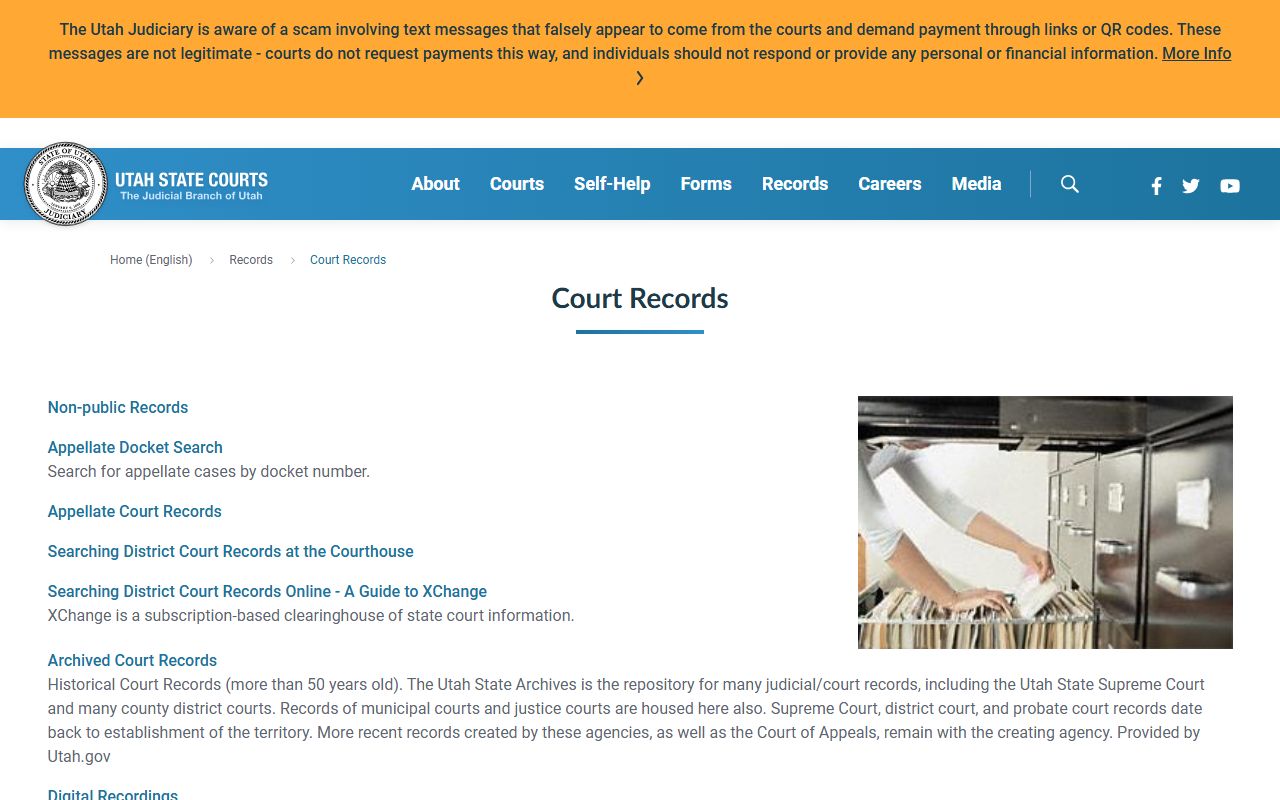
That page shows where each record type lives, so you do not waste a billable search in the wrong system.
- Open Utah Courts XChange and pick a jurisdiction. Use District Court for felonies, divorce, probate, and major civil cases. Use Justice Court for traffic, small claims, and class B or C misdemeanors.
- Enter a party last name, a company, or a case number. Put an asterisk in the first name field to catch middle names, like John*.
- Set the search scope to Salt Lake County or a specific Salt Lake court so you skip statewide false hits.
- Click Search, then read the result rows: county, court location, case type, case number, filing date, and party names.
- Open the case number for the full case history. Any document you pull from a result costs $1.00.
The search box itself lives on this page, near the top and bottom of the page.
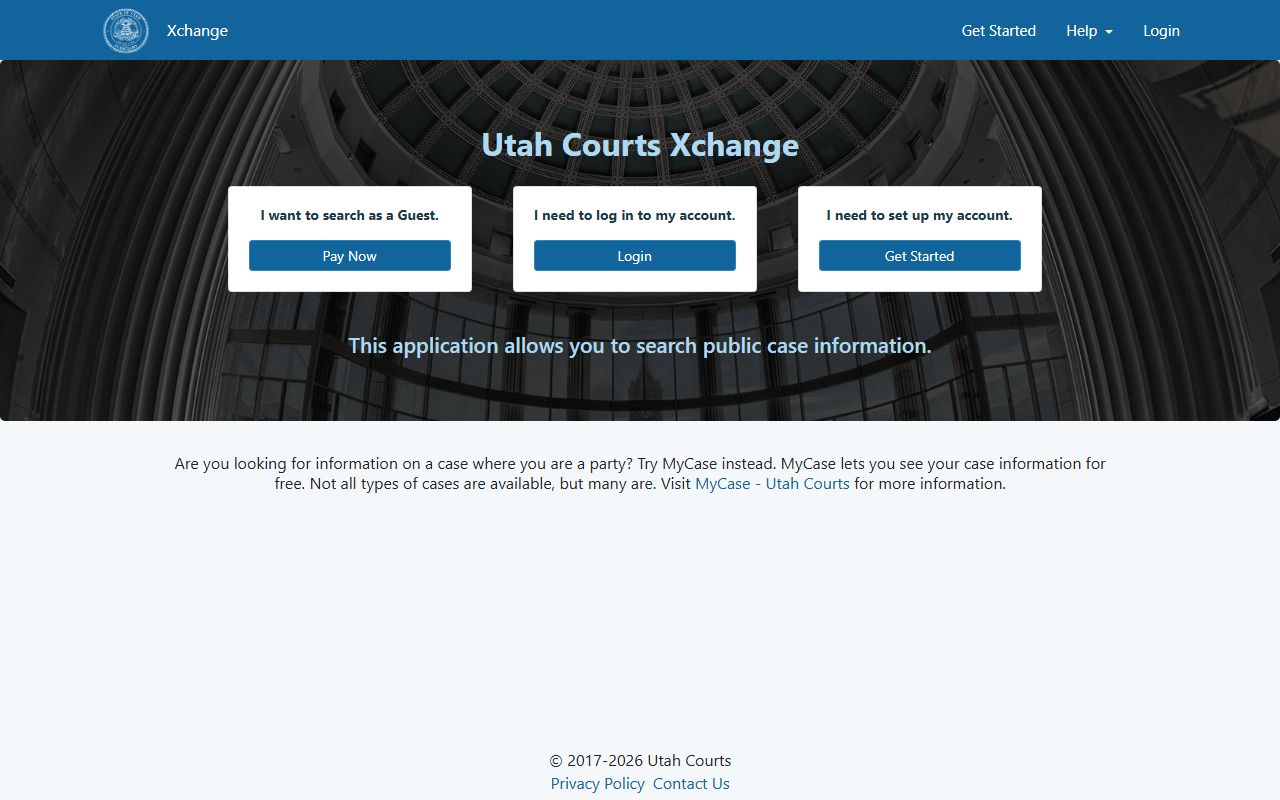
The portal returns at most 500 results per search, so narrow common names with a county, court, or date range.
The Salt Lake County Judicial System
Utah uses four main court levels, and Salt Lake County touches all of them. The District Court is the trial court of general jurisdiction. It hears felonies, divorce and custody, big civil suits, probate, guardianship, and appeals from the Justice Courts. Salt Lake County is the largest county in the Third Judicial District, which also covers Summit and Tooele counties.
Below the District Court are the Justice Courts. These are limited-jurisdiction courts run by the county and by cities. They handle traffic, small claims, local ordinance cases, and lower misdemeanors. Juvenile Court is a separate trial court for delinquency and child-welfare matters, and most of its records are not public. Appeals from the District Court go up to the Utah Court of Appeals or the Utah Supreme Court.
Case flow: Justice Court › District Court › Utah Court of Appeals › Utah Supreme Court
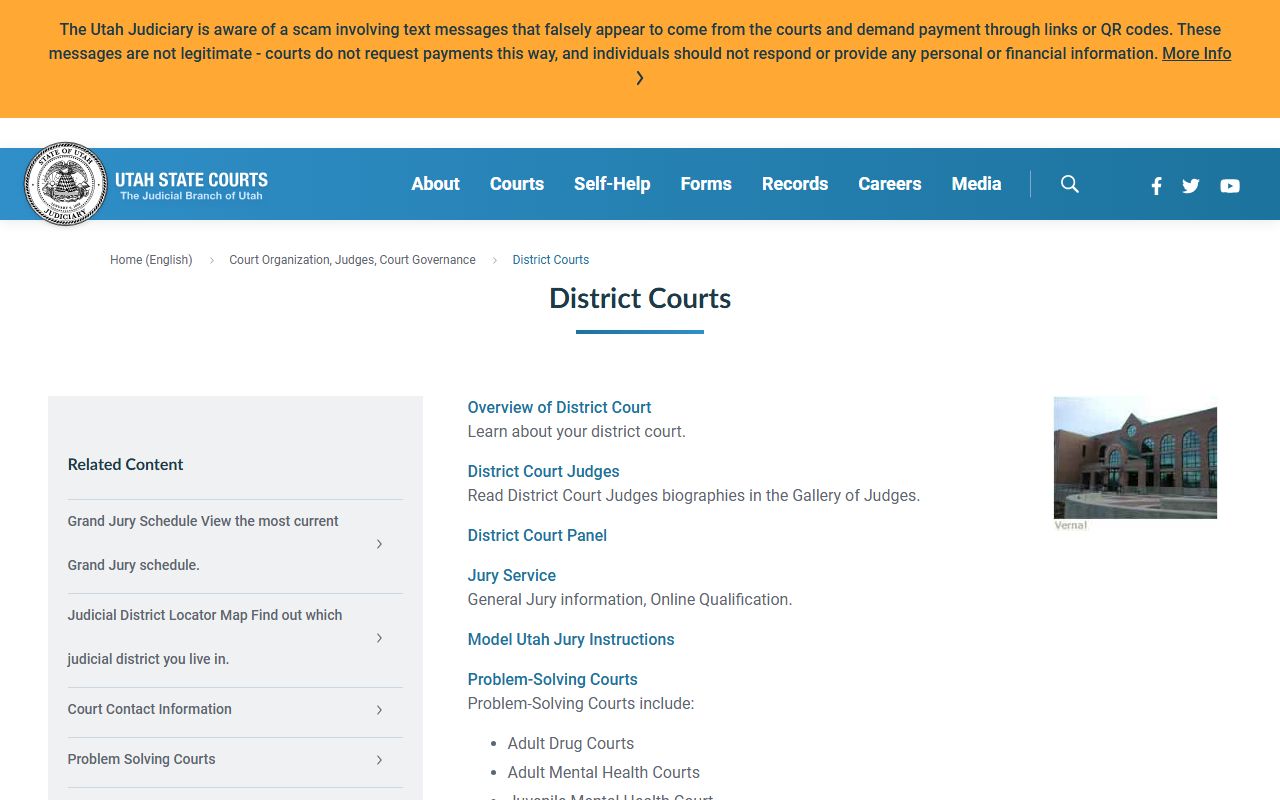
The Utah Courts District Courts page explains what the general-jurisdiction trial court handles.
For the local view, the Third District page lists Salt Lake County resources, forms, and standing orders.
| Court | Jurisdiction | Case Types |
|---|---|---|
| District Court (Third District) | General trial court | Felonies, divorce, custody, probate, major civil, guardianship |
| Justice Courts (county and city) | Limited jurisdiction | Traffic, small claims, infractions, class B and C misdemeanors |
| Juvenile Court | Juvenile trial court | Delinquency, abuse, neglect, dependency (records mostly restricted) |
| Court of Appeals / Supreme Court | Appellate | Appeals from District and Juvenile Court |
A Salt Lake County speeding ticket from city police often lands in a city Justice Court, while a county citation may go to the Salt Lake County Justice Court. The Third Judicial District page ties these pieces together for Salt Lake County.
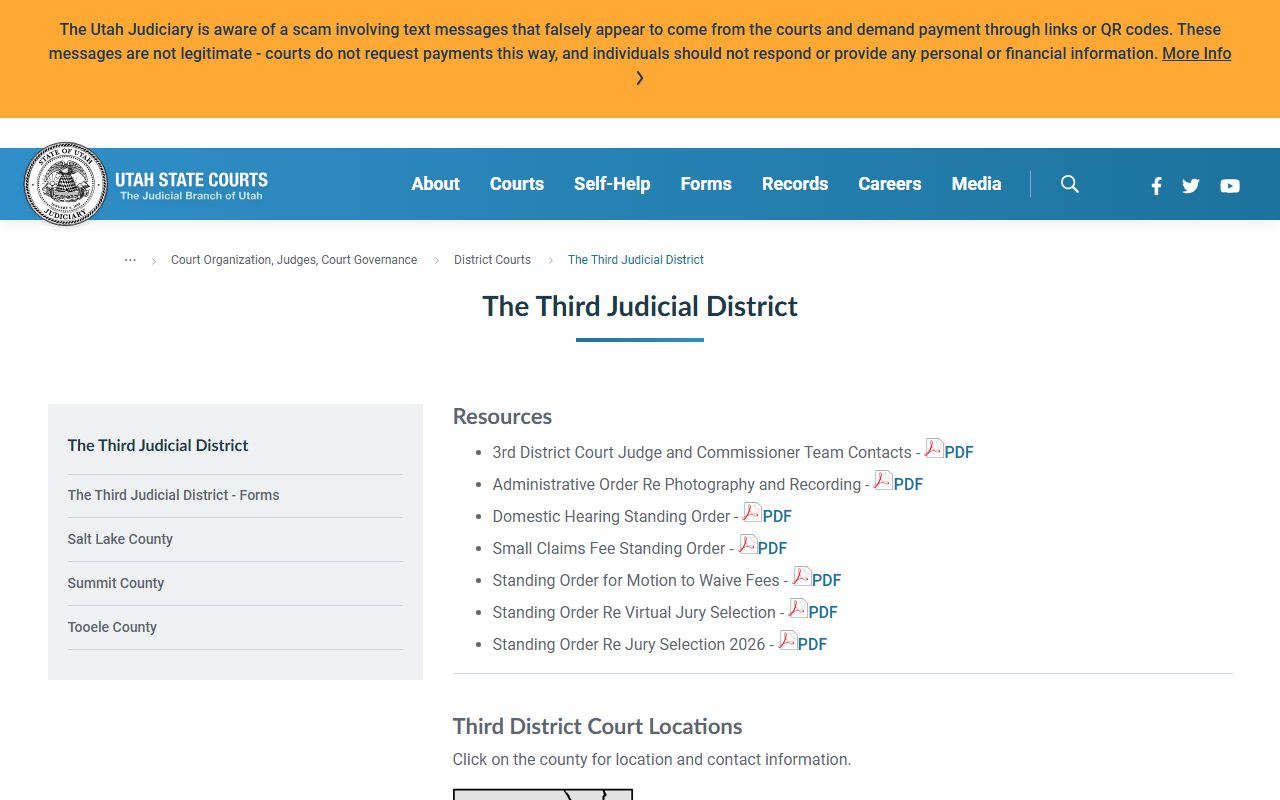
That distinction matters when you filter an XChange search by court location.
Salt Lake County Courthouses
The Scott M. Matheson Courthouse is the hub for state court work in Salt Lake County. It holds Third District civil, criminal, family, and probate dockets, plus the Utah appellate courts and the State Law Library. The county-run Justice Court and the Salt Lake County Clerk both sit south of downtown at the Government Center on State Street. Salt Lake City runs its own Justice Court a few blocks from the Matheson building.
The Utah State Court Directory is the fastest way to confirm an address, a court type, or a phone number for any Salt Lake County court.
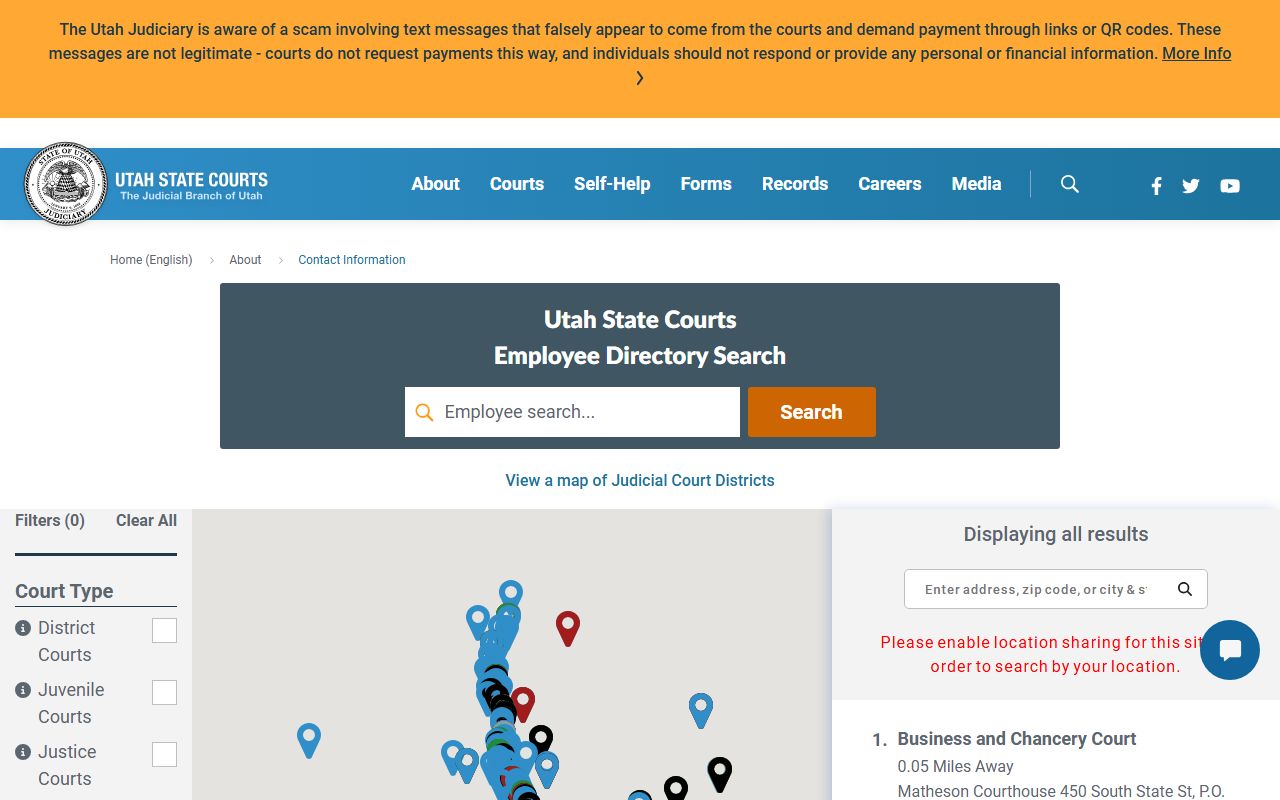
Use the official directory before a visit, since court locations and hours can change.
Scott M. Matheson Courthouse
450 South State Street
Salt Lake City, UT 84111
(801) 238-7300
Salt Lake County Justice Court
2001 South State Street, Suite S4200
Salt Lake City, UT 84190
(385) 468-8200
Salt Lake City Justice Court
333 South 200 East
Salt Lake City, UT 84111
(801) 535-6300
Types of Court Records Available in Salt Lake County
Salt Lake County court records cover almost every kind of legal dispute. The District Court files run from felony cases to estates. The Justice Courts add the high-volume traffic and small claims load. Each case type has its own access rules, and some files mix public docket entries with restricted filings.
Most case types come out of the District Court, but traffic and minor crimes start in a Justice Court. Here is the short version of what you can find.
- Criminal records - Felony files in District Court; misdemeanors and infractions in Justice Court, with charges, pleas, and sentences.
- Civil records - Contract suits, injury claims, debt, liens, garnishment, and name changes.
- Family and divorce records - Divorce, custody, parentage, child support, and protective orders, with some filings sealed.
- Probate records - Wills, estates, guardianship, and conservatorship, all handled inside District Court.
- Traffic records - Citations, fines, and court dates, usually held by a county or city Justice Court.
The XChange coverage page shows which courts and dates the public search reaches.
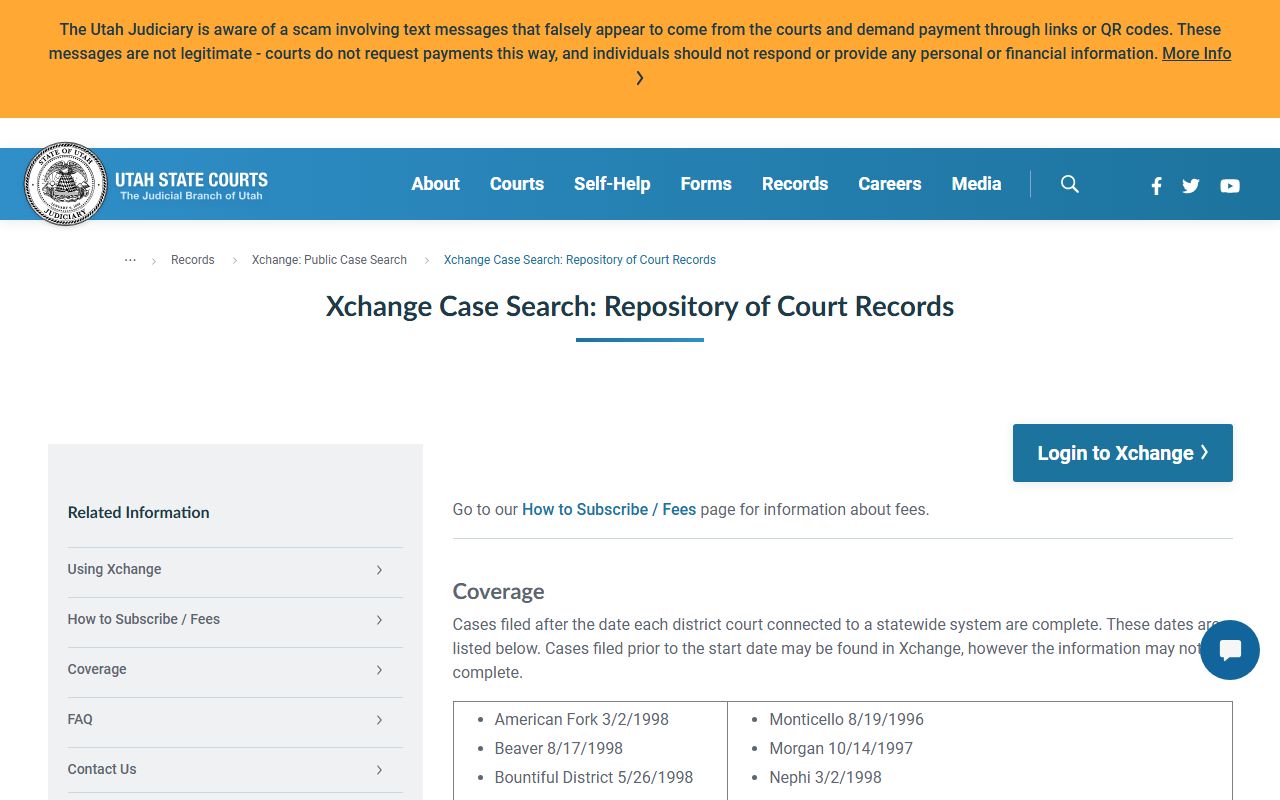
If a case is very new, the court may not have entered it yet, so check the deadline on any paperwork you hold.
What Salt Lake County Court Records Show
A Salt Lake County court record is built from many small fields. XChange returns a result row first, then a full case history when you open the case number. Official XChange help lists the fields you should expect. Birth dates show up mainly for criminal defendants, so a civil result without a birth date is still a valid match.
The official help page walks through every search field and result field so you can read a row without guessing.
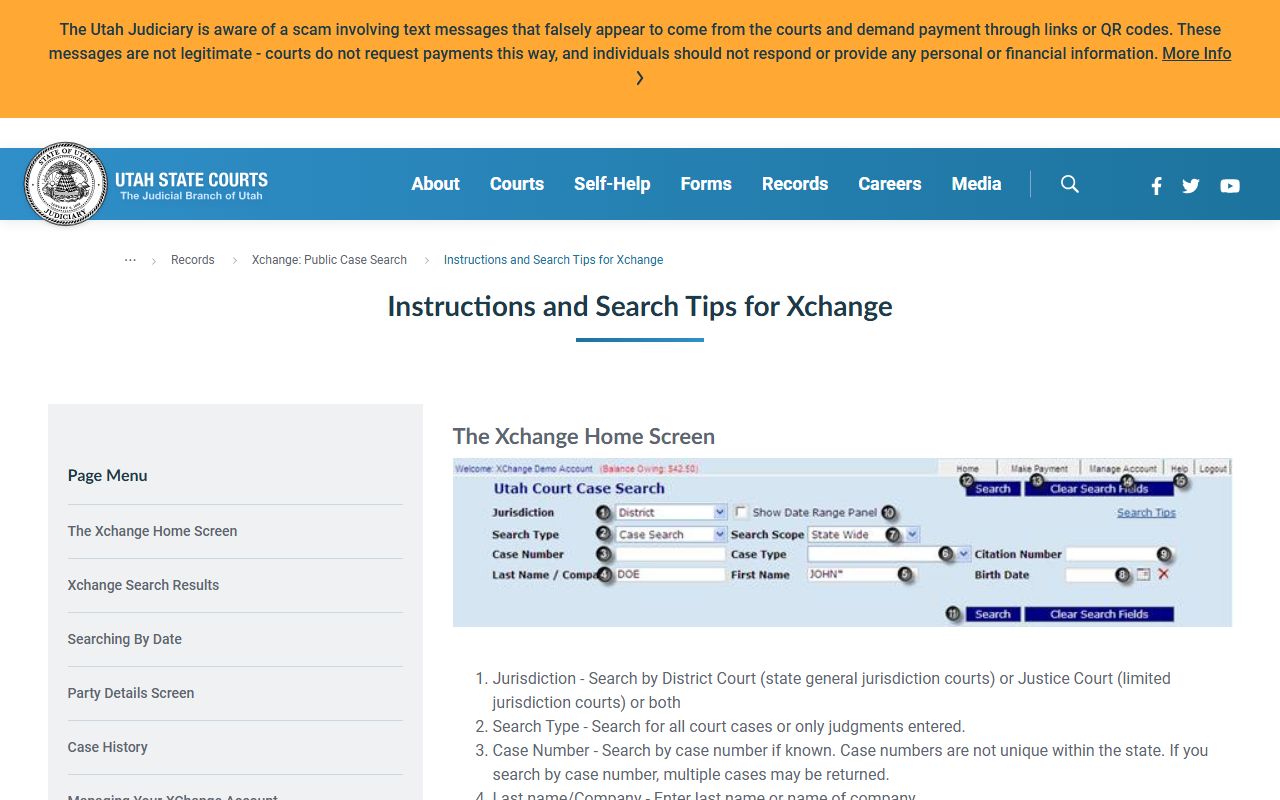
That page also explains the wildcard and billing rules that trip up first-time users.
| Field | What It Shows |
|---|---|
| Case Number | The court's file number; the first two digits give the filing year. |
| Filing Date | The day the court opened the case. |
| Parties | Plaintiff, defendant, petitioner, or respondent names and party codes. |
| Charges / Cause | The statute, charge, or claim that drives the case. |
| Disposition | The outcome of a charge or the whole case. |
| Sentence / Judgment | Jail, fines, restitution, probation terms, or a civil money award. |
Public Access Laws for Salt Lake County Court Records
Utah splits its access rules in two. County agency records, like Sheriff or health files, fall under GRAMA, the Government Records Access and Management Act. Court files follow the Utah Code of Judicial Administration. Both systems start from the same idea: records are public unless a rule or statute makes them private, controlled, or protected. For a Salt Lake County court file, the court rule controls; for a county office record, you file a GRAMA request with that agency.
A few statutes do most of the work, and each is worth a quick read before you request anything.
Key Statutes:
Utah Code § 63G-2-201 - Gives anyone the right to inspect a public record for free and to get a copy during normal hours.
Utah Code § 63G-2-204 - Sets what a written request must include and gives agencies about 10 business days to respond.
Rule 4-202.02 - Presumes court records are public and lists the files that stay non-public.
The XChange subscription page sets out the online fee tiers for the public and other users.
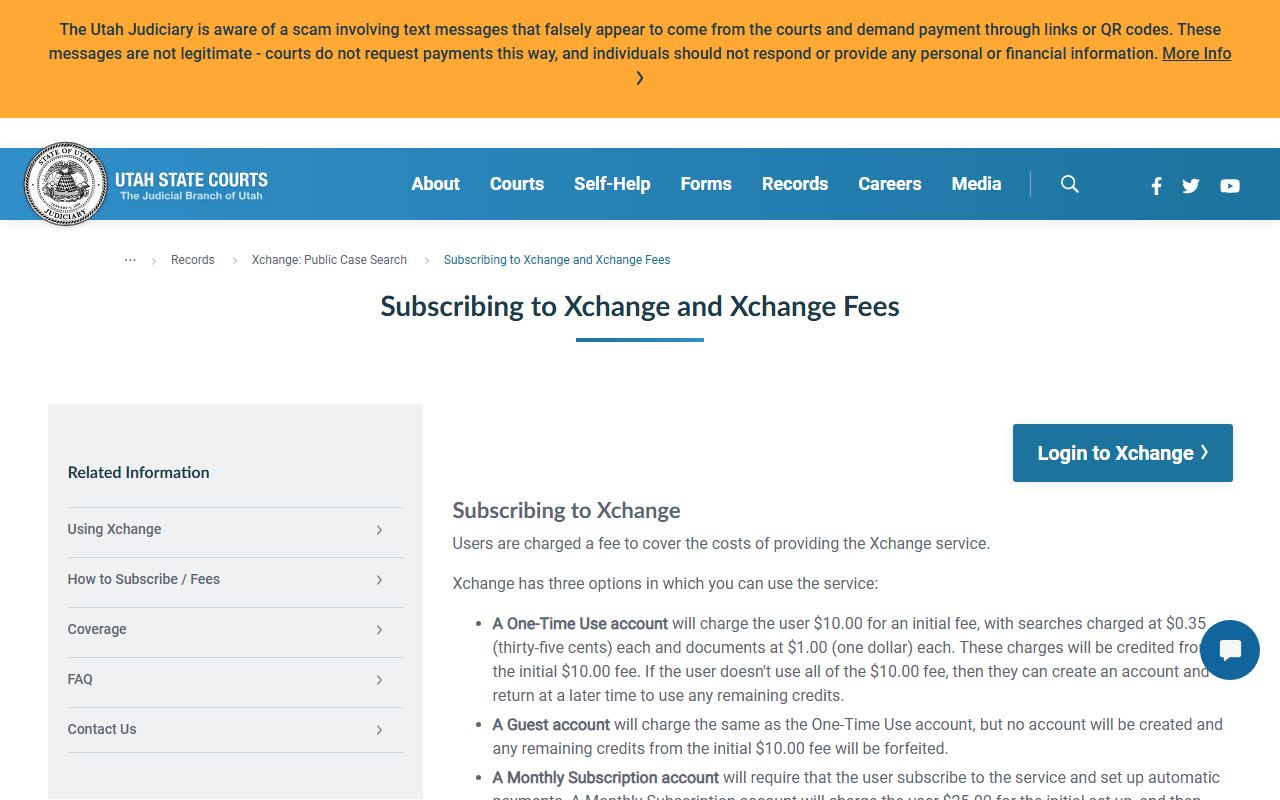
Court copy fees are set by Utah Courts and are separate from county GRAMA fees.
Records That Are Restricted or Confidential
Not every Salt Lake County court record is open. Juvenile delinquency files, child-welfare reports, and adoption cases are restricted by statute. Mental health and civil commitment files hold private medical detail. Expunged adult criminal records drop out of public view after a court order. Sealed filings need a petition to open. Personal identifiers, like Social Security numbers and home addresses, are redacted from public copies.
To view a sealed or non-public record, a party or an authorized person follows the Utah Courts non-public records process and, when needed, files a petition to unseal. A victim may reach limited juvenile records under Utah Code 80-6-604, but that is not the same as a general public lookup.
Note: A booking record or a charge is not a conviction, so read disposition fields before you treat any Salt Lake County court record as final.
Specialty Courts in Salt Lake County
Salt Lake County runs several problem-solving courts that work beside the regular docket. These programs trade frequent court review and treatment for a path away from jail. The District Attorney's office helped build many of them under a "therapeutic justice" banner.
Mental Health Court serves defendants whose mental-health needs drive their cases, using close supervision, treatment, and regular hearings. Veterans Court does the same for veterans and service members, adding veteran-specific services and mentoring. Misdemeanor Drug Court and the adult drug courts use testing, case management, and incentives to break the cycle of substance-driven offenses. A Salt Lake City Domestic Violence Court and the Salt Lake Area Family Justice Center round out the local set, with a focus on victim safety and coordinated support.
Salt Lake County Sheriff and Jail
The Salt Lake County Sheriff's Office, led by Sheriff Rosie Rivera, runs the county's two jails: the Metro Jail and the Oxbow Jail Facility. The Corrections Bureau handles booking, housing, visits, and records. Booking takes an average of 6 to 8 hours from arrival, and longer if the person cannot be processed right away. The jail does not give out release dates over the phone.
To check who is in custody, use the county inmate lookup, then see Salt Lake County inmate records for the full roster details and warrant records for active warrants. A booking is a custody event, not a final court result, so pair it with a court search when you need the outcome.
Marriage, Divorce, and Probate Records
These three record types confuse people the most, because they split across offices. Marriage license records come from the Salt Lake County Clerk. Divorce decrees and case files are District Court records, not clerk records. Probate runs inside the District Court too. See marriage and divorce records for license and decree steps and probate records for estates and guardianship.
- Testator
- The person who made a will.
- Executor
- The person named in a will to settle the estate; Utah courts call this a personal representative.
- Conservator
- A person the court appoints to manage money or property for someone who cannot.
Salt Lake County Court Records Fees
Fees depend on where the record lives. XChange charges for online access and for documents. The County Clerk sets marriage copy fees. County GRAMA fees follow each agency's own schedule. The table below gathers the common, confirmed amounts so you can budget a request.
| Item | Amount |
|---|---|
| XChange document access | $1.00 per document |
| Uncertified marriage copy by mail | $2.00 |
| Certified marriage copy by mail | $5.00 |
| Marriage license | $50.00 |
Court filing and copy fees for District Court are published on the Utah Courts fee page and can change, so confirm before you pay.
How to Interpret Salt Lake County Court Records
Court files use shorthand. A "disposition" is the outcome. "Dismissed with prejudice" means the case cannot come back; "without prejudice" means it might. An "information" is the prosecutor's charging paper. A "bench warrant" usually follows a missed court date. A charge is an accusation, while a conviction is a guilty finding or an accepted plea, so the two are not the same thing.
Read the docket from the bottom up to follow a case in order. Watch the party codes, since they tell you who filed what. When a term is unclear, check the field meaning before you draw a conclusion about a Salt Lake County court record.
Accuracy and Record Limitations
Online court data lags real life. A new filing, a plea, or a dismissal can take days to post. The public jail roster has personal identifiers removed for privacy, so it will not match a full ID. XChange caps a search at 500 results and warns that case and citation numbers are not unique statewide. Treat any single search as a starting point, not the last word.
Note: Confirm a name, a charge, or a disposition with the court clerk or the originating office before you rely on any Salt Lake County court record.
History of Salt Lake County Courts
Salt Lake County is Utah's oldest urban legal center. The historic City and County Building opened in the 1890s and still stands across State Street from the modern courthouse. The Scott M. Matheson Courthouse, named for the Utah governor who served from 1977 to 1985, now pulls trial, appellate, juvenile, and law-library work into one downtown block. Over time the state added online tools, like XChange for public case search and a daily jail dashboard, that made Salt Lake County records easier to reach than in most Utah counties.
Frequently Asked Questions
How do I search Salt Lake County court records online?
Use Utah Courts XChange for public District and Justice Court cases. Start broad with a last name, set the scope to Salt Lake County or a specific court, and add a wildcard first name to catch middle names. XChange is subscription-based online, but the public can search for free at courthouse terminals and the Utah State Law Library. A maximum of 500 results returns per search.
Is the Salt Lake County Clerk the court clerk?
No, not for court case files. The Utah State Courts keep District, Justice, and Juvenile Court records. The Salt Lake County Clerk is a separate elected office for marriage licenses, elections, passports, and County Council records. For a divorce decree or a criminal docket, use Utah Courts. For a marriage license copy, use the County Clerk.
Can I download documents from XChange?
Sometimes. Result rows include a Case History and Documents link. Any document that is available costs $1.00. Not every filing can be pulled, and sealed, juvenile, or protected documents do not show up for general public users. The official XChange help page explains which documents are reachable.
More on the Salt Lake County Court Records FAQ page.